Category: united nations
-

South Kleang (Suor Proat)
Beginning of 11th century Jayavarman V Suryavarman I. Inscriptions within the southern Kleang are similar to the oaths of functionaries engraved on one of the door jambs of the east gopura of the royal palace enclosure. “Hurrah” for Japan developer of this outstanding project Children Monks and their Monk teacher Yes, monastic life starts at…
-
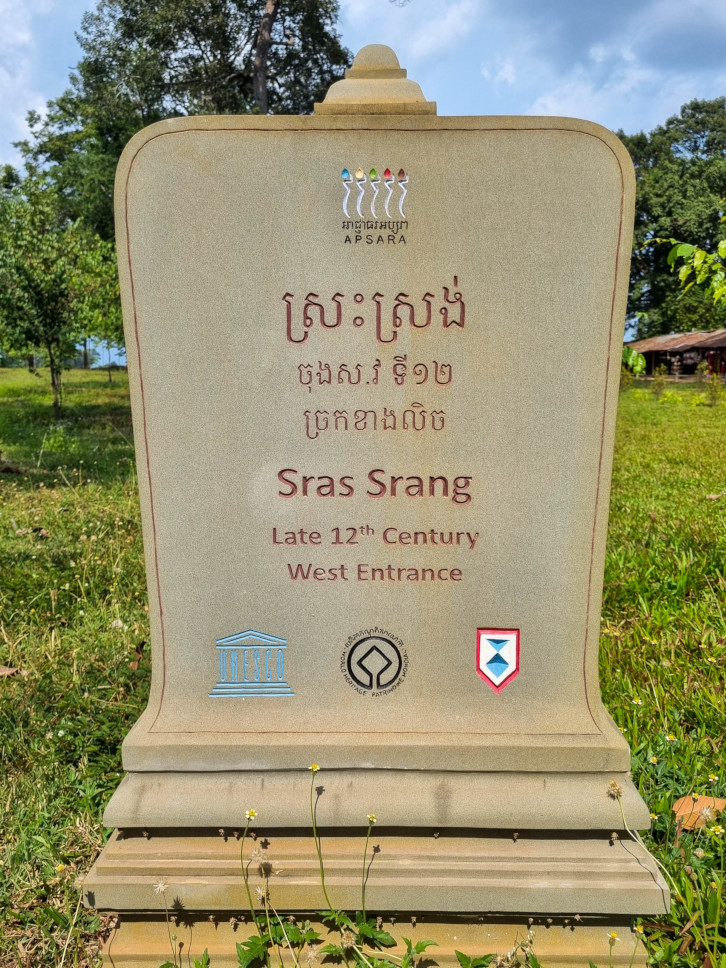
Sras Srang
End of 12th century Jayavarman VII. A large basin (the royal bath), 700 meters by 300, set on the axis of Banteay Kdei and bordered by stone steps. Originally excavated during the mid 10th century, to its west is an elegant terrace, and nearly at its center a small island on which there are some…
-

Preah Khan
1191 AD Jayavarman VII Buddhist. A royal city forming rectangle of 700 by 800 meters surrounded by a moat and similar to Ta Prohm, but with only four enclosures. Opens to the east to a baray (at the center of which is Neak Pean) via a terrace used originally as a boat landing. The large…
-

Phnom Krom
End of 9th century Yasovarman I. Hindu Perhaps the second of three temples built by Yasovarman I on the hills dominating the Angkor plain – the others being on Phnom Bakhengand, Phnom Bok. Badly deteriorated. Three sandstone sanctuaries aligned north-south are dedicated to the Brahmanic trinity – Shiva between Vishnu (north) and Brahma (south).
-

Prasat Bei
10th century Hindu (Shiva). Three small brick towers aligned north south on a common laterite base.
-

Pre Rup
961 AD Rajendravarman II Hindu (Shiva). On the same north south axis as the Eastern Mebon which it follows by only 9 years. Similar in style and composition, though much grander. Probably central to the second capital which developed following its return from Koh Ker, to where it moved between 921 and 944. It is…
-

Phnom Bakheng
End of 9th century Yasovarman I Hindu (Shiva). At the center of the first capital of Angkor which formed a square of about 4 km surrounded by a moat of which the south west quarter is still visible. A ‘natural mound’ five tiered pyramid temple, the bulk of which is hewn from the bed-rock and…
-

Phimeanakas
11th century Suryavarman I – Udayadityavarman II Hindu. The Royal Palace of the next capital was enclosed within a five meter high laterite wall that is doubled by a second of later construction. At the center of this enclosure is Phimeanakas, a three tiered rectangular pyramid built in laterite, which was perhaps a private royal…
-

North Khleang (Prasat Sour Prat)
North Kleang Temple: Beginning of 11th century Jayavarman V – Suryavarman I. The two Kleang are similar buildings of uncertain function. The one to the north was built first – two inscriptions date from 1002 to 1049. Prasats Sour Prat: End of 12th century Jayavarman VII Hindu (Vishnu). The towers of the rope dancers. Twelve…
-

Neak Pean
End of 12th century Jayavarman VII Buddhist. ‘The entwined naga’. Built as an island 350 meters square, in the middle of the Preah Khan Baray. A square central basin has at its center a circular base for the sanctuary ringed with two entwined nagas (serpents). Four gargoyles in small sanctuaries discharge into smaller square basins…
-

Lolei
End of 9th century Yasovarman I Hindu (Shiva). Four brick towers (though perhaps originally six) set on a two tiered base in the middle of the Lolei Baray, (Indratataka), a large ancient reservoir of 3.8 by 0.8 kilometers. The inscription tells us that excavation of the baray began five days after the consecration of Indravarman…