Category: buddha
-

Pokhara’s World Peace Pagoda
World Peace Pagoda, Pokhara (Enshrining The Sacred Relics of Lord Shakyamuni Buddha) The pioneer of peace Siddhartha Gautam Buddha was born in Lumbini of Nepal in 563 BC and spent 29 years of familiar life In his kingdom kapilvastu, Nepal. After his Great Renunciation at the age of 35 he attained enlightenment in Boddhagaya of…
-

Sacred Garden
UNESCO World Heritage Site Lumbini, Nepal, the Birthplace of Lord Buddha has been inscribed on the world heritage list. This heritage site is of exceptional universal value which deserves protection for the benefit of humanity. King Ashoka’s Pilar The Devil and the Saint The lady in pink represent the saint, the figure in black represent…
-

Lumbini Development Trust Survey
Lumbini is a Nepali town right at the border with India and is the place where Lord Buddha was born and raced as a child in accordance with Emperor Ashoka’s pillar/edict found in the archaeological record. I arrived at Lumbini during the third mass COVID-19 wave in India and some of the Buddhist monasteries were…
-

World Peace Pagoda
Lumbini, Nepal. This Peace Pagoda has been built by Nipponzan Nyohoji Buddhist order founded by Most Venerable Nichi Dattsu Fujii of Japan through contribution of devotees in Nepal and Japan. The construction of the peace pagoda all over the world was initiated by the Most Venerable Fujii Guruji after feeling the tragic scene of atomic…
-

Boudhanath Stupa
After moving from Mexico to Nepal, during the Global Pandemic period of time, I found myself on a Buddhist pilgrimage at Boudhanath Stupa, Kathmandu Nepal, as part of my scientific research too. It was there when the Buddhist LAMA told me about my falcons and the relation they had with my pass lives as a…
-
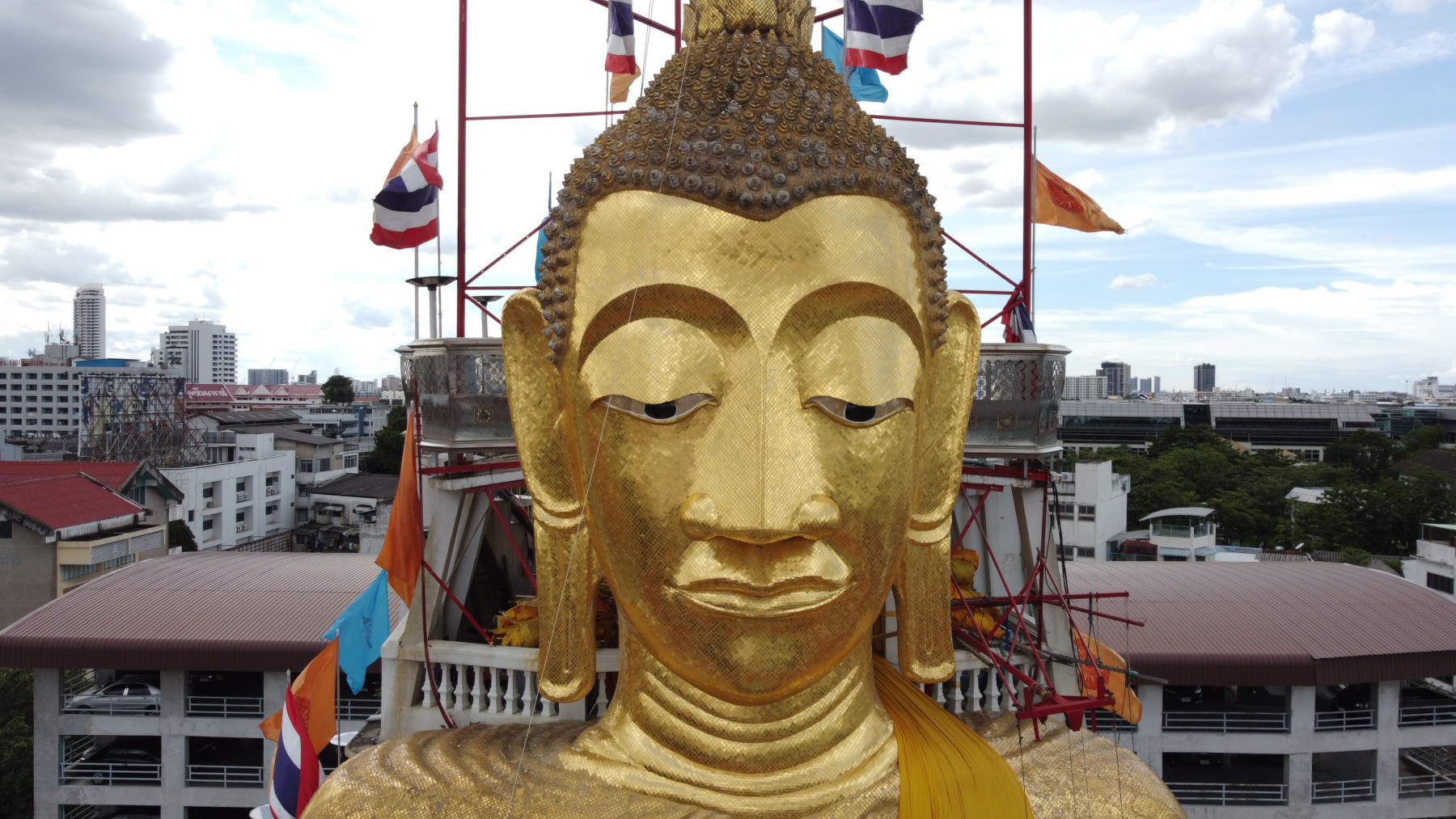
The Temple of the Standing Buddha
Wat Intharawihan, Bangkok, Thailand. It is almost impossible to be aloud to get some drone footage in this area due to the heighten security guarding governmental buildings around the temple. So this is a very rare drone footage of the Standing Buddha in Bangkok, Thailand. I asked the Buddhist Lama in charge of the temple…
-

Bayon
End of 12th century Jayavarman VII Buddhist. At the center of the last city of Angkor and perhaps a microcosm of the kingdom with representations of all the major divinities – Buddhist to the south and east, and Hindu to the north and west. 200 large faces adorn the 54 towers signifying the omnipresence of…
-

Bat Chum
953 AD Rajendravarman II Buddhist. The first known Buddhist temple. Three brick sanctuaries with the main architectural elements in sandstone on a common moulded laterite base. Inscriptions give details of dedications to three Buddhist divinities and reveal the architect of the Eastern Mebon as its patron and builder. More at “The Angkor Survey“.
-

Baphuon
Middle of 11th century Udayadityavarman II Hindu (Shiva). A three tiered temple mountain – the “impressive copper tower even higher than the tower of gold” (the Bayon) described by Tcheou Ta-Kouan, a Chinese diplomat visiting at the end of the 13th century. Probably the central temple of the fourth kingdom of Angkor. More at “The…
-

Banteay Srei
967 AD Rajendravarman II Jayavarman V Hindu (Shiva) 25 kilometres to the north east of Angkor Thom. A jewel to which the nature of the material used – a finely textured rose coloured sandstone – is perfectly suited. Monumental size and architectural theme give way to a miniature scale and a dense and exquisite detail…
-

Banteay Kdei
End of 12th century Jayavarman VII Buddhist temple of four enclosures, the outer measuring 700 by 500 metres, showing signs of at least two stages of construction in differing styles. Typical of Jayavarman VII, but in an advanced state of ruin. More at “The Angkor Survey“.