
Beautifully rendered in vivid color and with an energetic use of line, this series of six large canvases was created by French painter and illustrator Louis Maurice Boutet de Monvel (1850–1913) and highlights key moments in the life of the medieval heroine Joan of Arc (c. 1412–1431). Originally conceived as large murals for a church in Joan of Arc’s hometown of Domrémy, the series was commissioned sometime after 1899 by Montana senator William A. Clark.
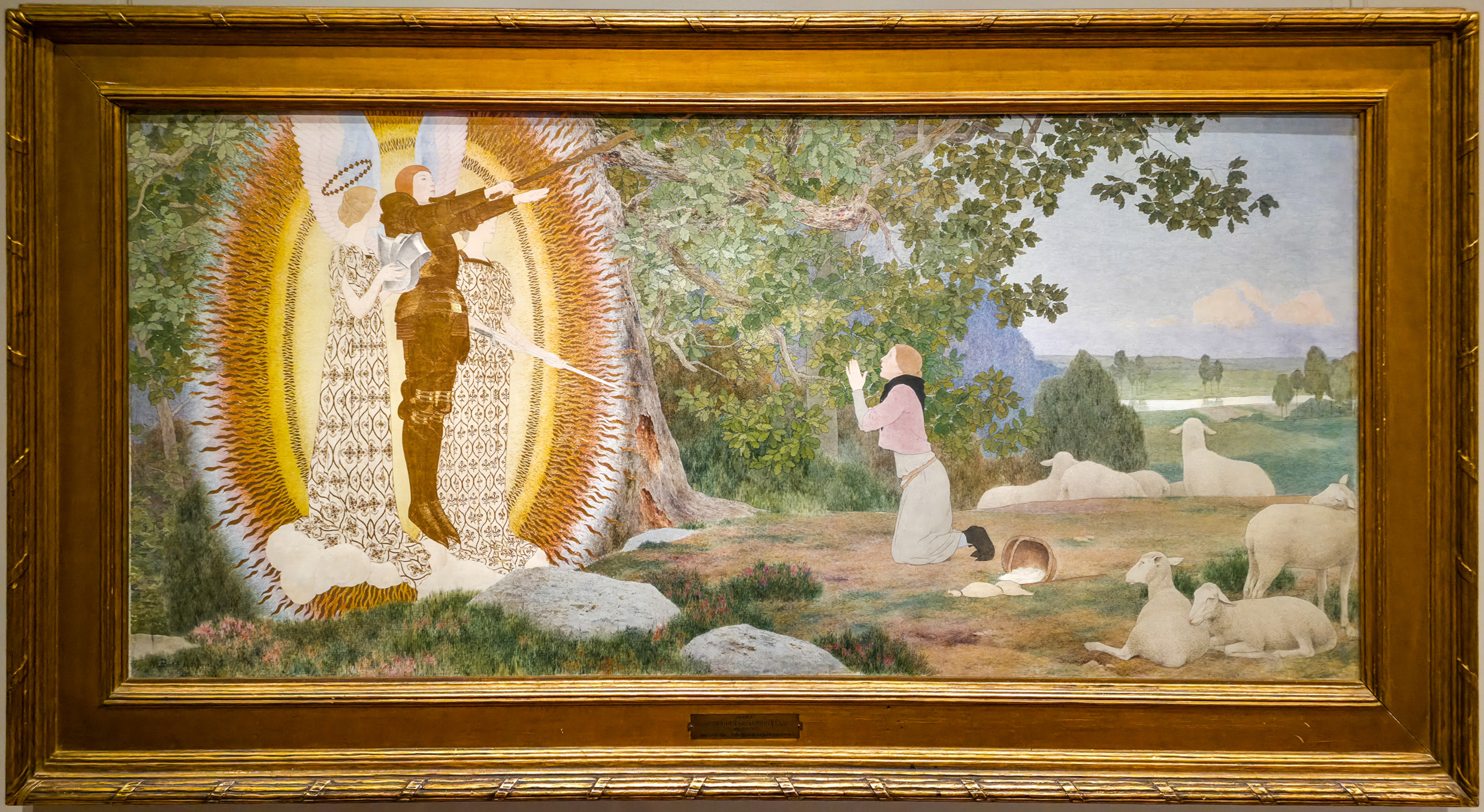
The Vision and Inspiration
Louis Maurice Boutet de Monvel
French, 1850–1913
(Joan of Arc series: I), c. 1907–early 1909
oil and gold leaf on canvas
Corcoran Collection (William A. Clark Collection, 1926)
2015.19.34
nga.gov/Corcoran
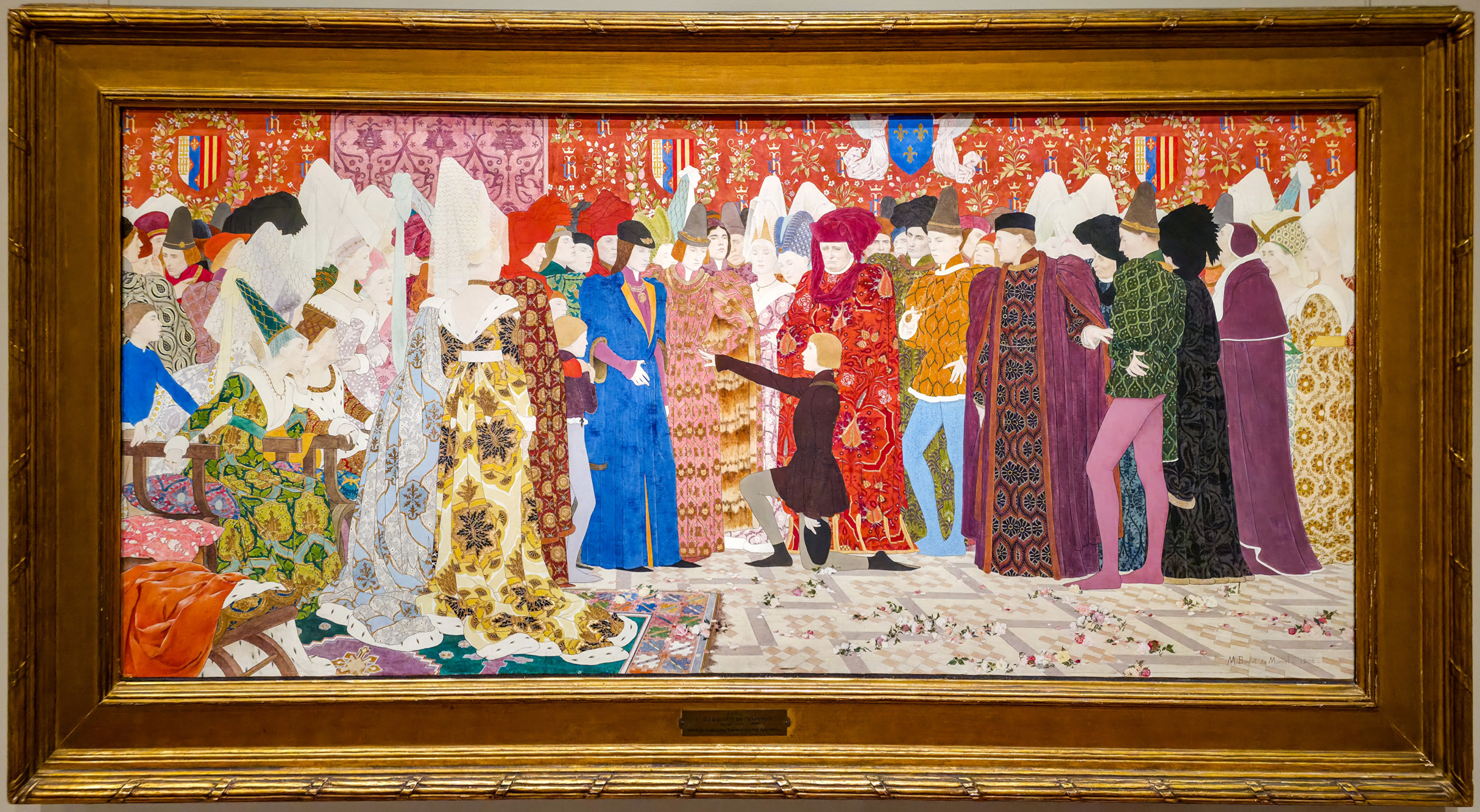
Her Appeal to the Dauphin
Louis Maurice Boutet de Monvel
French, 1850–1913
(Joan of Arc series: II), 1906
oil and gold leaf on canvas
Corcoran Collection (William A. Clark Collection, 1926) 2015.19.35
nga.gov/Corcoran
By the time of Clark’s request, the story of the “Maid of Orleans”—as Joan was often called (an allusion to her greatest military victory)—had inspired artists and authors for nearly five centuries in both her native France and beyond. The extraordinary story of her rise from peasant girl to soldier to the savior of France in their war against the English, as well as her capture and death at the stake, had been adapted to serve a number of differing ideologies. Boutet de Monvel’s interpretation is inspired by medieval art and Japanese prints and conveys a sense of powerful, dynamic emotion.
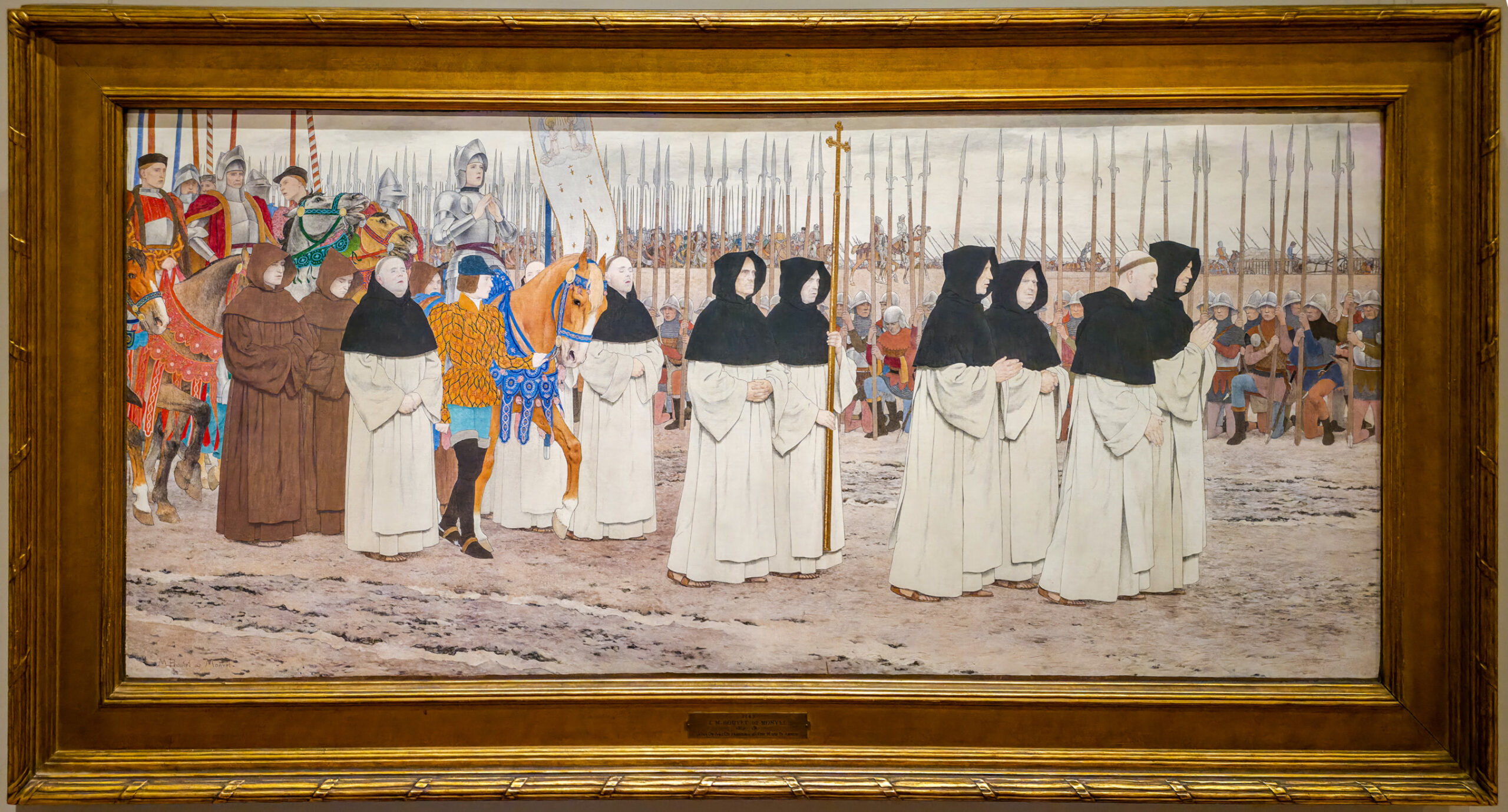
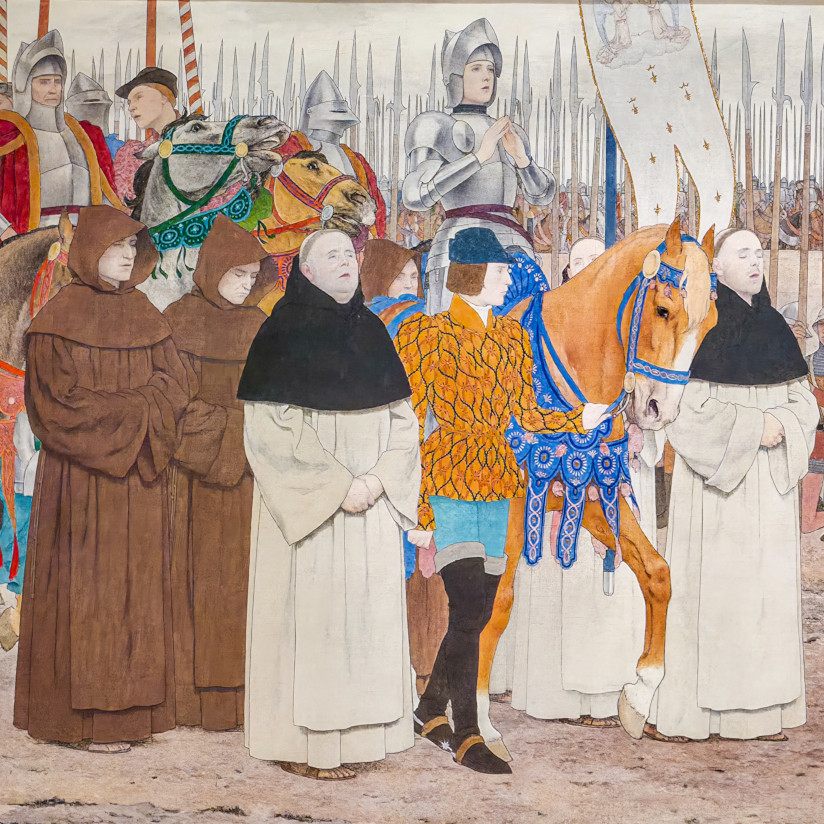
The Maid in Armor on Horseback
Louis Maurice Boutet de Monvel
French, 1850–1913
(Joan of Arc series: III), c. 1908–late 1909
oil and gold leaf on canvas
Corcoran Collection (William A. Clark Collection, 1926)
2015.19.36
nga.gov/Corcoran
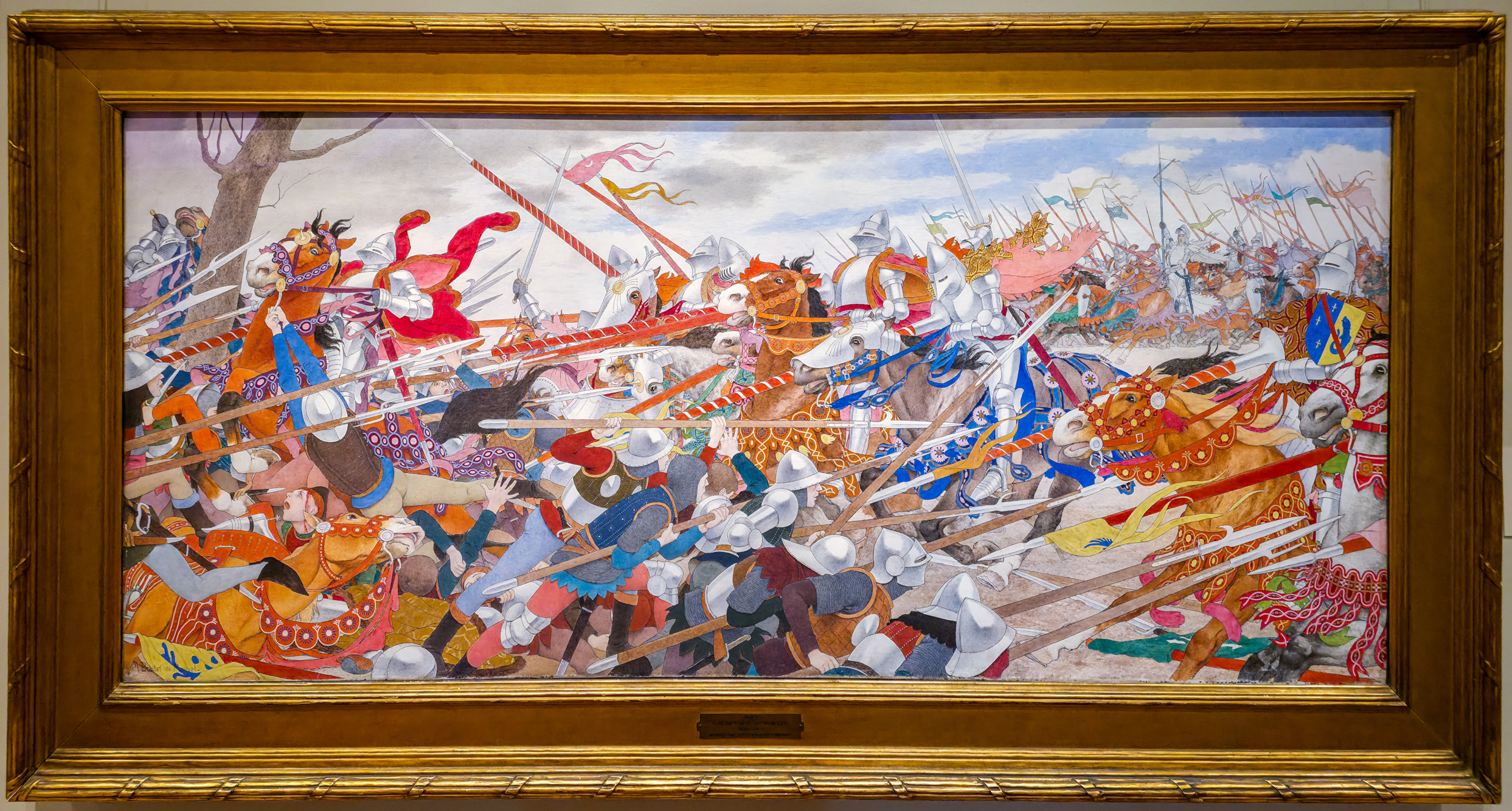
The Turmoil of Conflict
Louis Maurice Boutet de Monvel
French, 1850–1913
(Joan of Arc series: IV), c. late 1909–early 1913
oil and gold leaf on canvas
Corcoran Collection (William A. Clark Collection, 1926) 2015.19.37
nga.gov/Corcoran
In the first panel, we see a thirteen-year-old Joan in her family’s garden and bear witness to her calling by the Archangel Michael, who is flanked by Saints Catherine and Margaret. Through her physical appearance, Boutet de Monvel chronicles Joan’s transformation from maiden to martyr in the six years leading up to her death at the age of nineteen. In panel two she arrives at court sporting the clothing and hairstyle of a young man, and in panels three and four she wears the armor of a soldier. In panel five she is the personification of the country itself in a white gown resplendent with fleurs-de-lis, and lastly, she appears before the court defending her actions dressed as a humble servant.
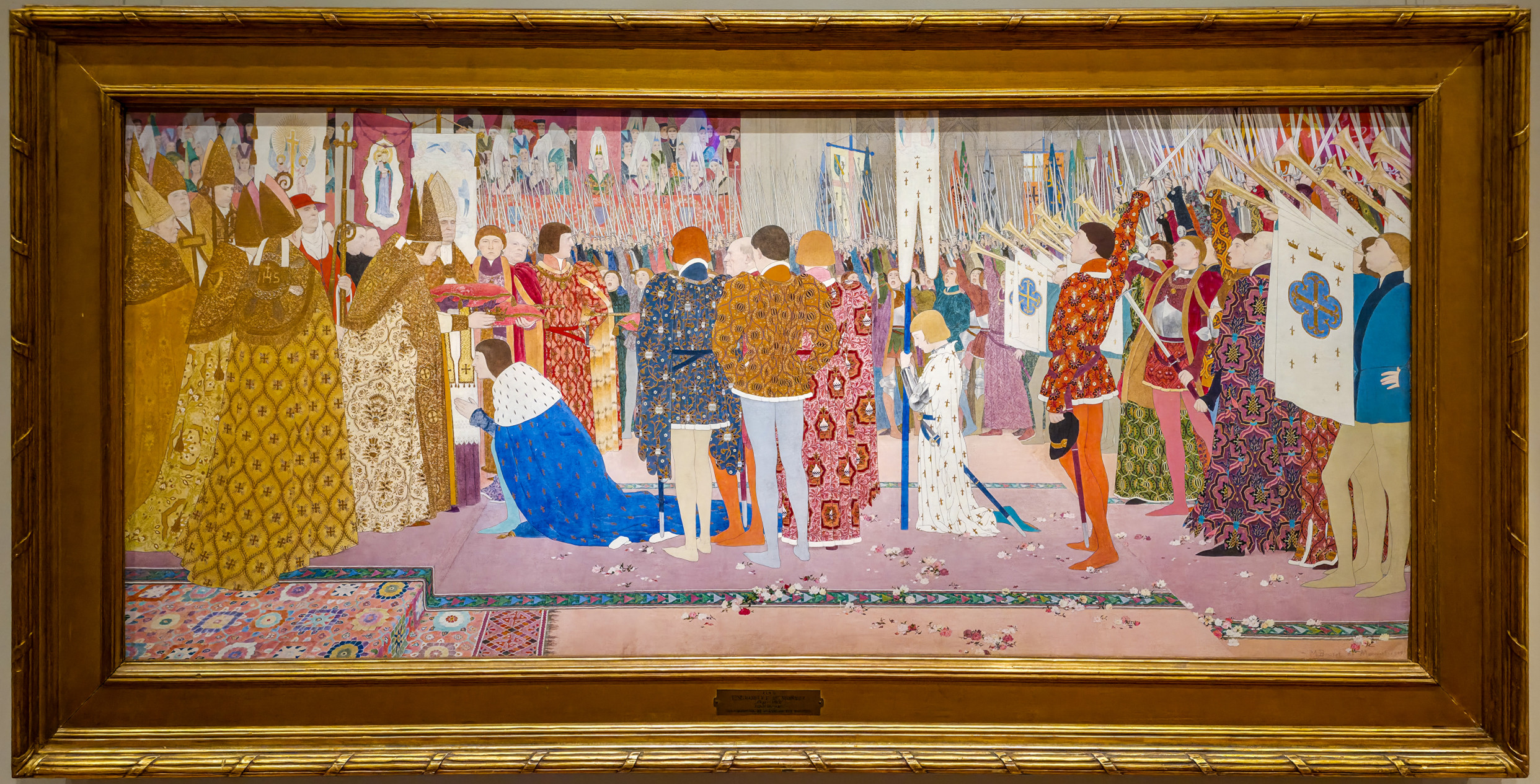
The Crowning at Rheims of the Dauphin
Louis Maurice Boutet de Monvel
French, 1850–1913
(Joan of Arc series: V), 1907
oil and gold leaf on canvas
Corcoran Collection (William A. Clark Collection, 1926)
2015.19.38
nga.gov/Corcoran
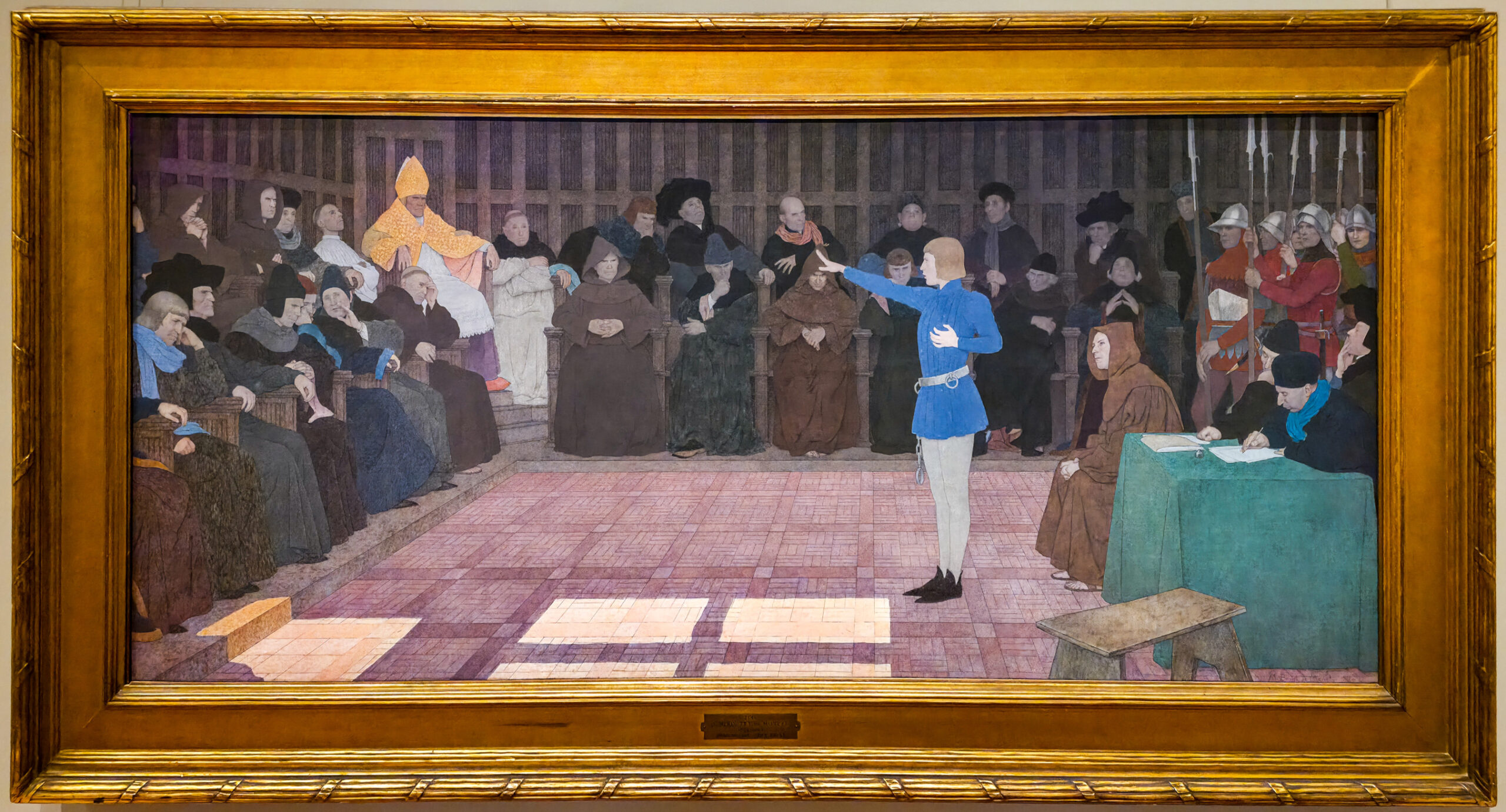
The Trial of Joan of Arc
Louis Maurice Boutet de Monvel
French, 1850–1913
(Joan of Arc series: VI), c. late 1909–early 1910
oil and gold leaf on canvas
Corcoran Collection (William A. Clark Collection, 1926) 2015.19.39
nga.gov/Corcoran
Missing from the National Gallery of Art. The following low-resolution, digitally unprocessed web image serves as a conceptual example of the scene required to culminate this monumental collection.
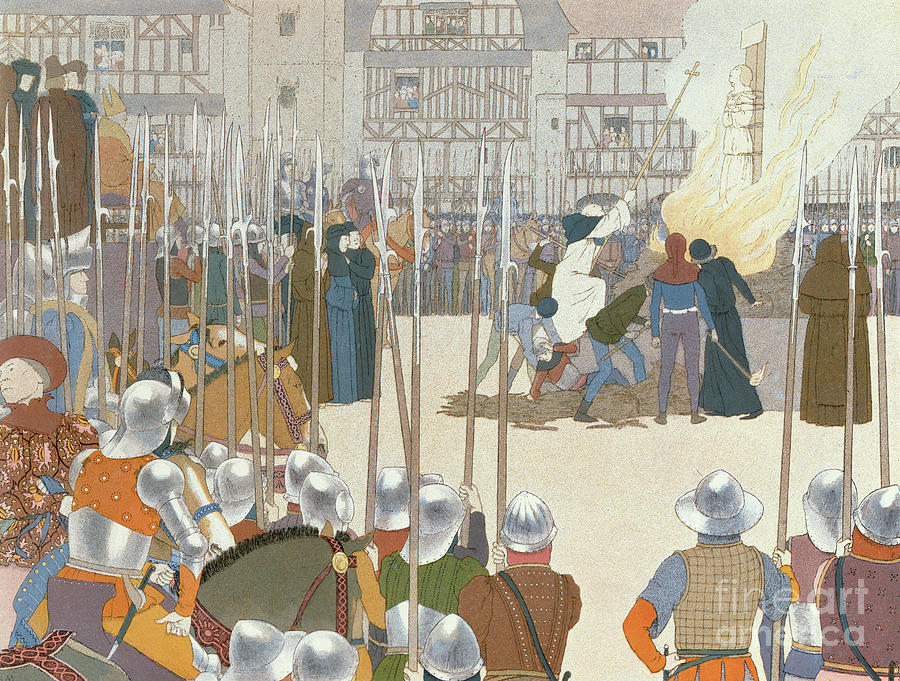
Joan of Arc at the Stake
This image shows the tragic culmination of the historical heroine’s journey. Bound to a tall wooden pillar in the old marketplace square of Rouen, France, a nineteen-year-old Joan of Arc looks up calmly toward a processional crucifix. The crucifix is raised high on a staff by a sympathetic priest, Father Martin Ladvenu, to comfort her amid the rising flames.
Rather than utilizing deep, moody shadows typical of academic history paintings, Boutet de Monvel treats the harrowing scene with flat, decorative color blocks, crisp ink contours, and a muted palette. This reveals the strong influence of Japanese woodblock prints and medieval frescoes.
The lower half of the frame is heavily crowded with rows of helmed English soldiers holding massive, vertical pikes. This creates a powerful visual barrier that isolates the execution platform from the viewers and the medieval timbered houses filling the background.
While senator William A. Clark later commissioned Boutet de Monvel to scale up parts of his illustrated book into six monumental oil-and-gold-leaf canvas panels for the National Gallery of Art (ending with panel VI, The Trial), this specific execution scene remained an iconic highlight of his original publishing work.