UNESCO World Heritage Site
Sanctuary in Transition: Art, Genius, and Renewal at St. Peter’s Basilica
Within the sacred boundaries of Vatican City lies St. Peter’s Basilica and its grand public square, an architectural marvel and UNESCO World Heritage site recognized globally for its monumental importance to human culture and history. Captured in vibrant detail through the video, the interior and exterior of this spiritual landmark demonstrate both its timeless artistic beauty and its living, evolving purpose. Vast barrel-vaulted ceilings adorned with gold coffering, intricate mosaic frescoes, and sweeping marble floors frame a sanctuary that constantly breathes history. Scaffolding and protective enclosures erected around central altars and under the towering dome reveal ongoing restoration and structural conservation efforts, demonstrating the delicate balance between honoring centuries of heritage and physically preserving it for future generations.
It was against this backdrop of architectural renewal that Pope Francis conducted public audiences, riding through the crowd in St. Peter’s Square and presiding over liturgical gatherings inside the basilica. These scenes stand as poignant historic markers, capturing the Holy See during a period of structural and spiritual transition. Just seven months after such moments of public ministry and active restoration work, a new Conclave would be called following the Pope’s sudden passing, leading to the historic election of Cardinal Robert Francis Prevost—taking the name Leo XIV—as the first American Pope.
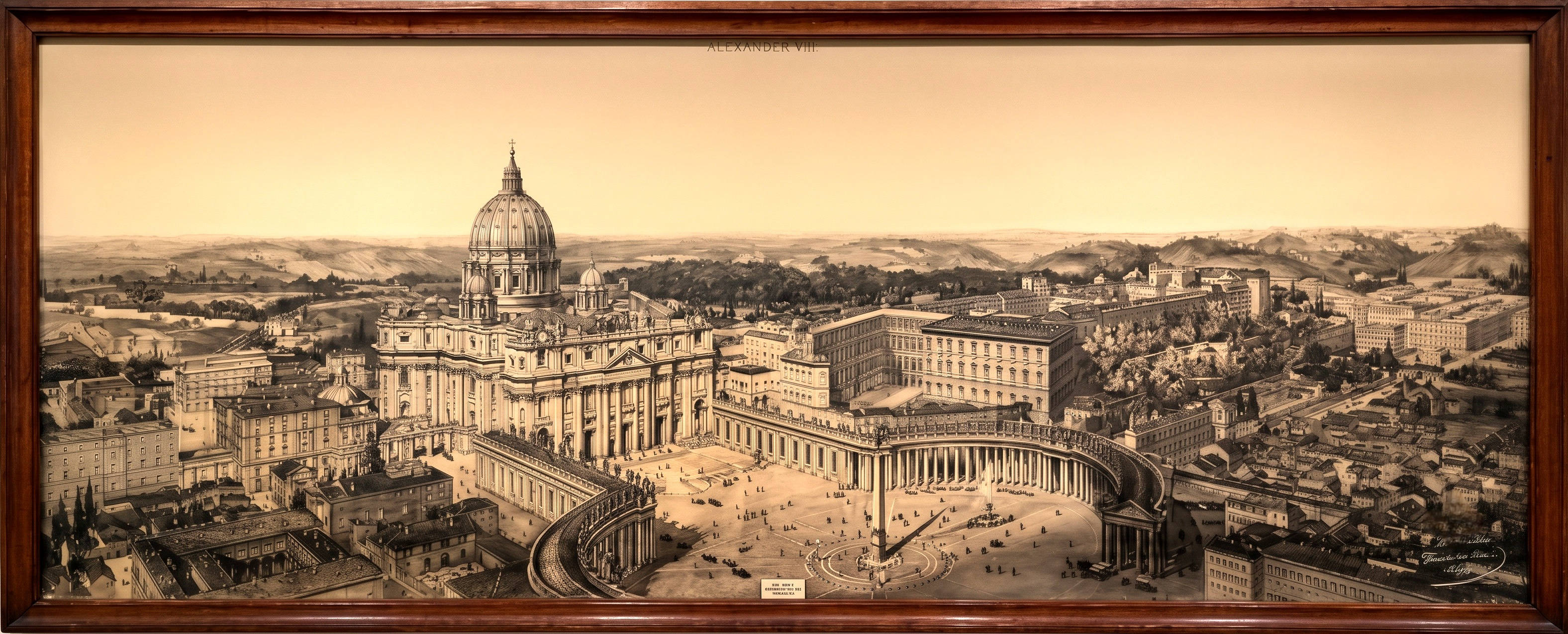
The aesthetic wonder visible throughout the sanctuary reflects a span of more than a century of Renaissance and Baroque genius. Donato Bramante first envisioned the central Greek-cross floor plan, which Michelangelo Buonarroti later refined alongside his design of the soaring, light-filled central dome. Carlo Maderno expanded the nave into a Latin cross and sculpted the grand exterior facade, while Gian Lorenzo Bernini gifted humanity the iconic bronze Baldacchino and the sweeping elliptical colonnades of St. Peter’s Square, designed like welcoming arms embracing the global faithful. As a UNESCO World Heritage site, the basilica serves as a universal treasure that embodies humanity’s highest achievements in structural engineering, sculpture, and artistic expression. Ultimately, as choral music resonates through the high arches and sunlight filters past the gold-leafed domes, St. Peter’s Basilica remains an enduring beacon of hope, unity, and timeless beauty, reminding the world of our shared capacity to create monuments that transcend time.
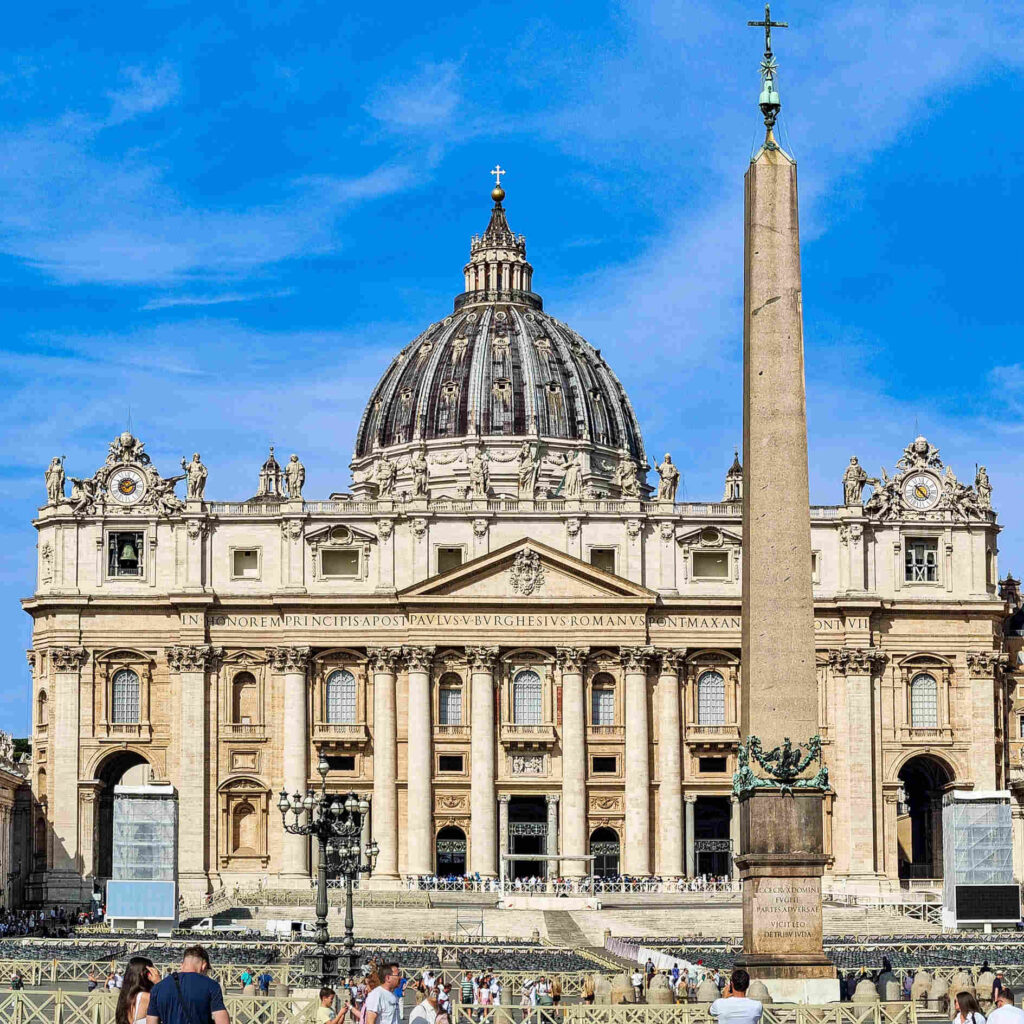
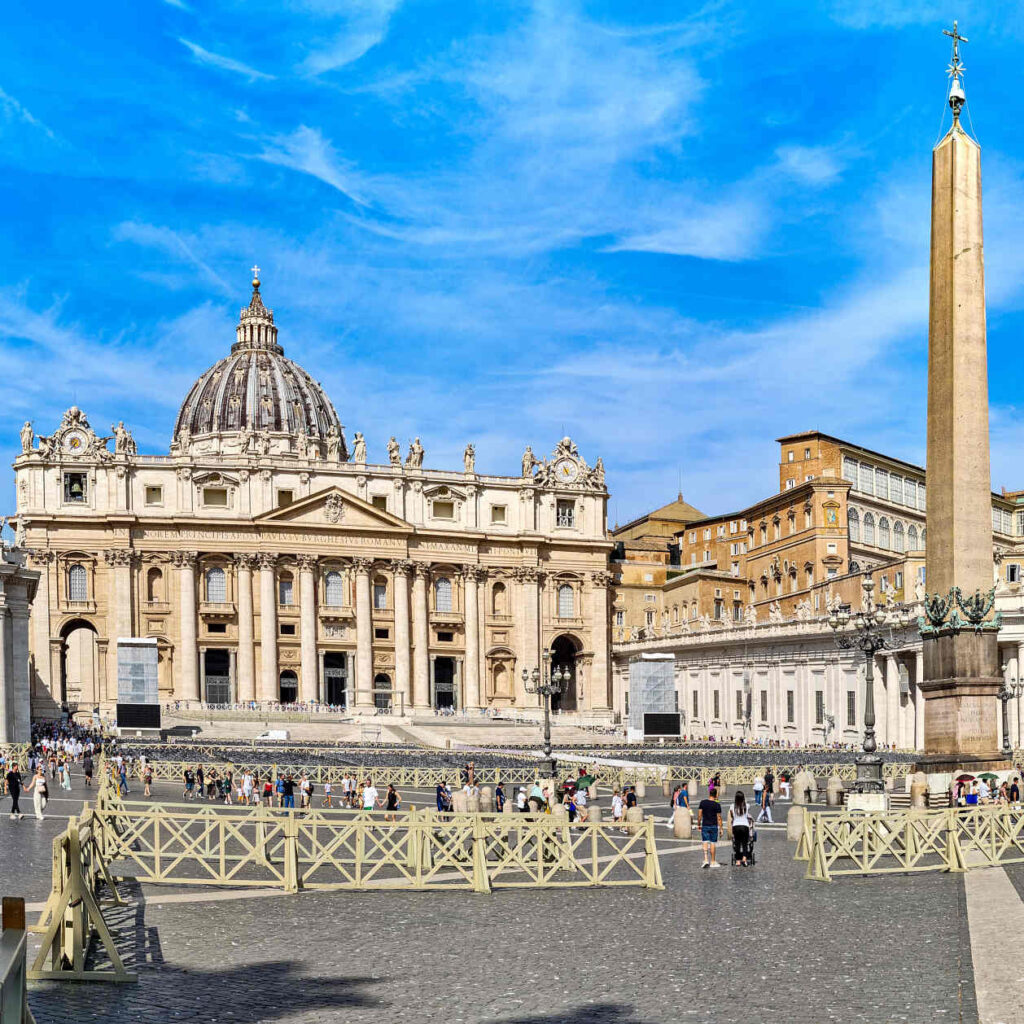
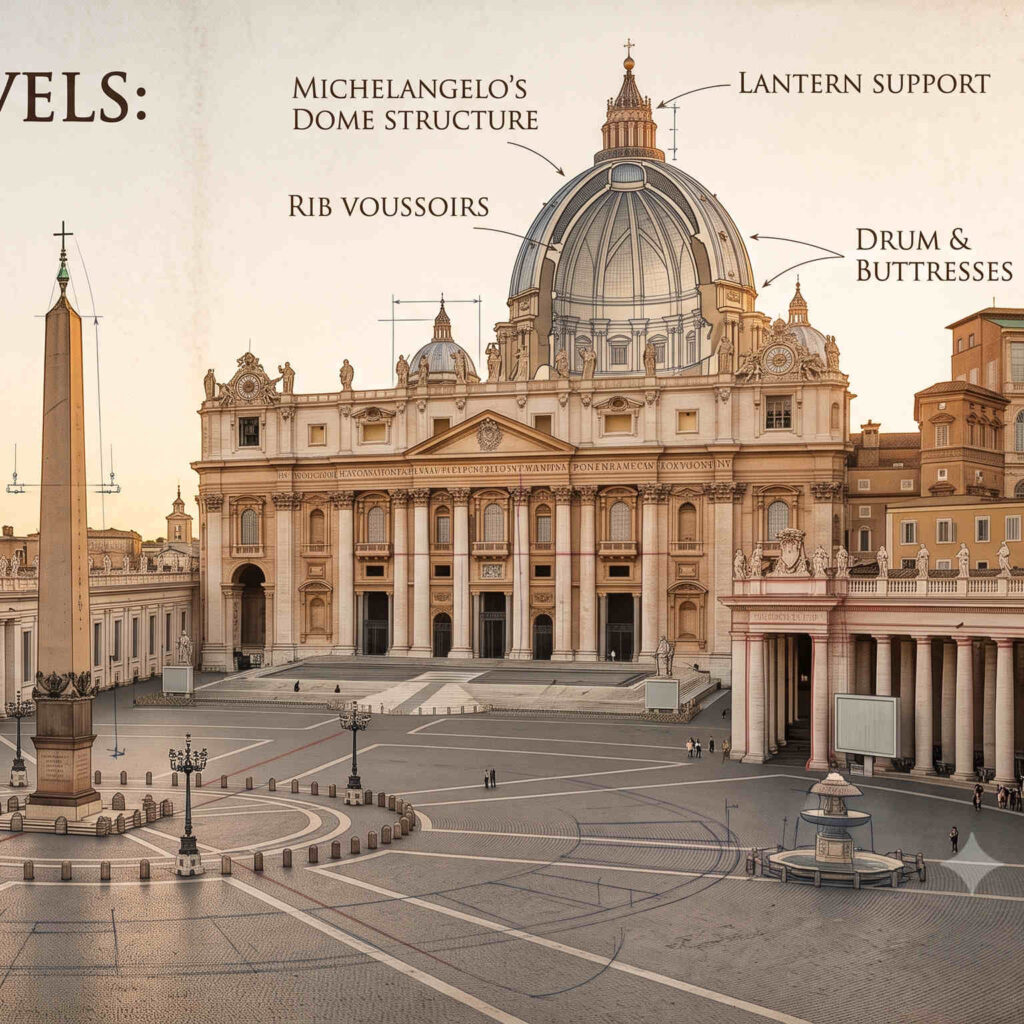
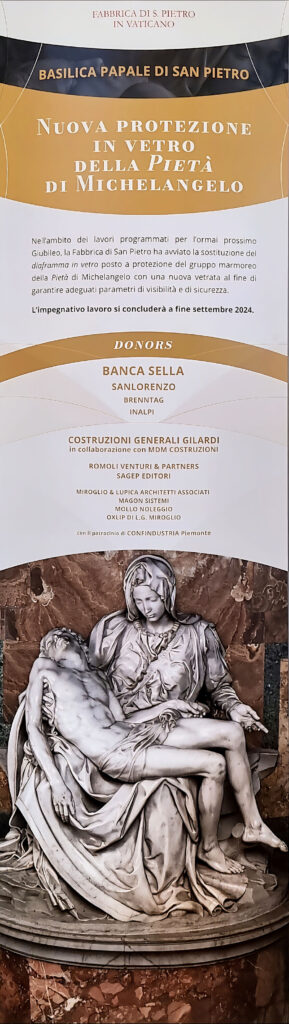
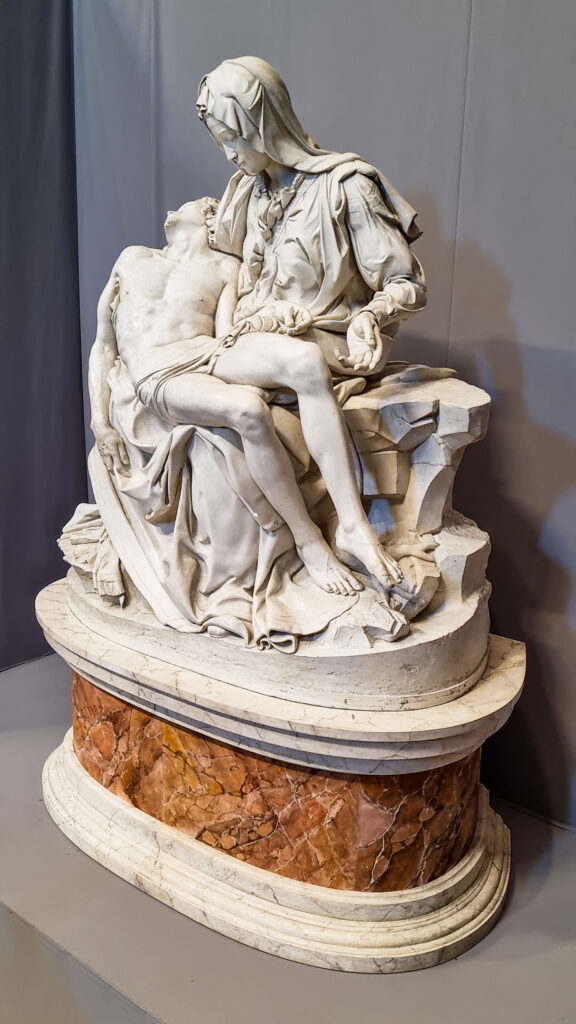
Standing as the monumental heart of Vatican City and Roman Catholicism, St. Peter’s Basilica and its sweeping plaza, St. Peter’s Square, represent one of the most extraordinary achievements of Renaissance and Baroque architecture in human history. Constructed over the traditional burial site of Saint Peter—the first pope—the current basilica was forged over more than a century by master minds like Donato Bramante, Michelangelo, and Gian Lorenzo Bernini. Before reaching its awe-inspiring facade, visitors pass through Bernini’s vast elliptical square, framed by majestic four-row colonnades designed to symbolize the “maternal arms of the Church” embracing pilgrims from across the globe. Together, the grand church and plaza form both an active spiritual sanctuary for millions and an unrivaled gallery housing artistic treasures like Michelangelo’s Pietà (gesso replica images) and Bernini’s towering bronze Baldachin.



Modern Legacy & UNESCO Significance
Today, St. Peter’s Basilica—as part of the Vatican City inscription—is protected as a UNESCO World Heritage Site. Its global significance relies on three major criteria:
- A Continuous Artistic Reliquary: It houses arguably the greatest density of high-Renaissance and Baroque art on Earth, including Michelangelo’s Pietà and Bernini’s masterworks.
- The Blueprint of Western Architecture: The engineering of its massive dome served as the direct structural inspiration for world landmarks centuries later, from the dome of St. Paul’s Cathedral in London to the US Capitol building in Washington, D.C.
- A Cultural and Spiritual Nexus: For over 1,500 years, the site has remained an unbroken center of pilgrimage, directly linking antiquity, the Renaissance, and the modern world through a single, sacred plot of land.