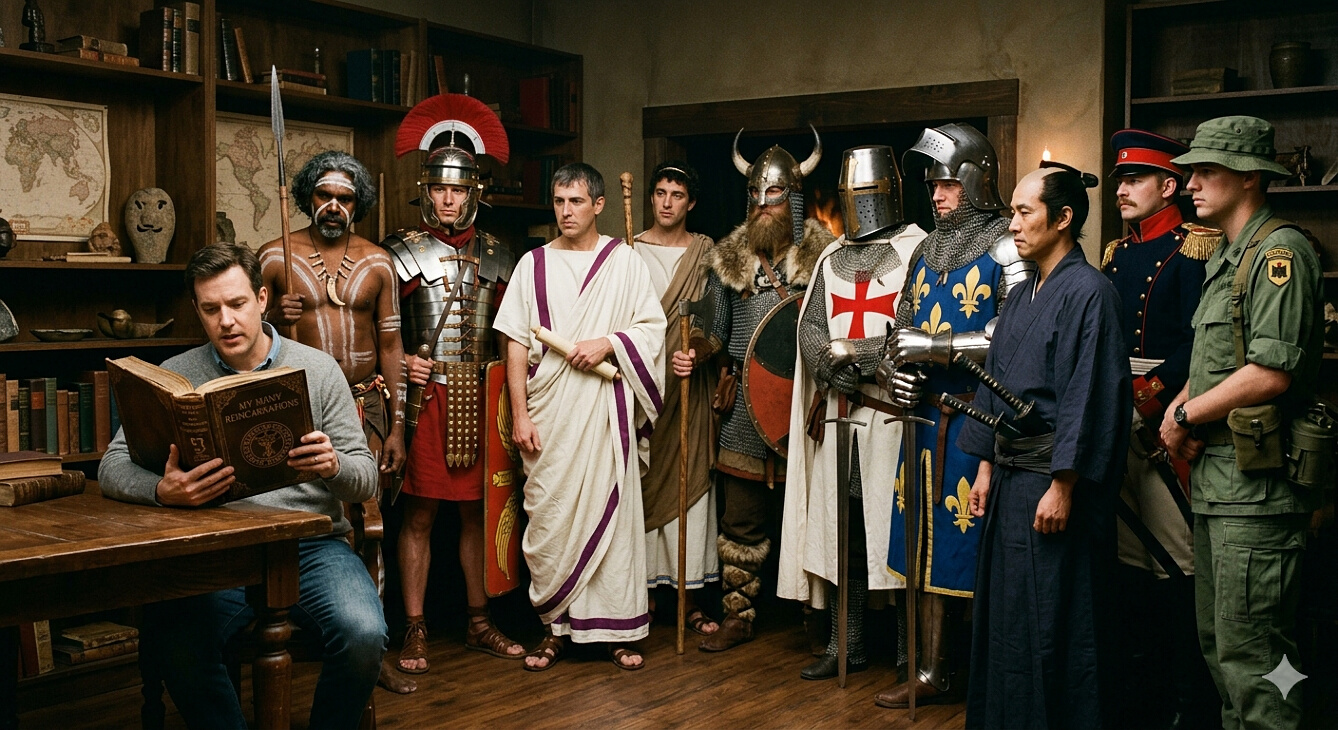
Case in Point “General George S. Patton’s Past Lives”
General George S. Patton Jr. possessed a complex spiritual framework that uniquely blended a devout Christian upbringing with a fierce, lifelong conviction in reincarnation. Raised in the Episcopal Church, Patton regularly read the Bible, prayed before battles, and viewed his military duties as a divine mission sanctioned by God. Yet, alongside this traditional Christian faith, he firmly believed his soul had inhabited numerous past lives as a Greek hoplite, a Roman legionnaire, and a cavalryman under Napoleon. Rather than seeing these two belief systems as contradictory, Patton seamlessly integrated them. He viewed his recurring rebirths as a divinely ordered process designed to refine his soul and prepare him for ultimate destiny as a warrior in the 20th century.
note: the following images and writings were made with around 20 different Artificial Intelligence (AI) Algorithms. The AI filled some Missing gaps in the story lines.
My Primeval Origins

The waking mind bounds across millennia, collapsing the illusion of linear time into a single, pulsing memory. To understand my primeval origins is to reject the Western notion of the past as a closed book, embracing instead the cyclical truth of the Alcheringa—the Dreaming.
Reincarnation is no mere philosophy; it is a cellular awakening. Beneath this modern skin, I carry the echoes of an ancient Sahul, the Pleistocene landmass where the red earth was fresh, the horizons boundless, and the margins between spirit, man, and beast beautifully blurred.
Standing on those arid plains of deep time, my posture shifts. The modern world dissolves. The weight of two sacred tools grounds me: a long, fire-hardened hunting spear balances in my right hand, while a heavy, non-returning hardwood boomerang—a karli, or killing stick—rests firmly in my left.
Hunting Australian megafauna demands an intimate understanding of giants that move like mythological deities. Before me rolls a herd of Diprotodon, three-ton marsupials resembling lumbering, colossal wombats. Tracking them is like reading the poetry of the earth—the crush of saltbush, the deep crescent of heavy claws in the clay, the scent of digested eucalyptus hanging thick in the heat. This is not sport; it is an act of sacred equilibrium, a transaction of life and death mandated by the Ancestors.
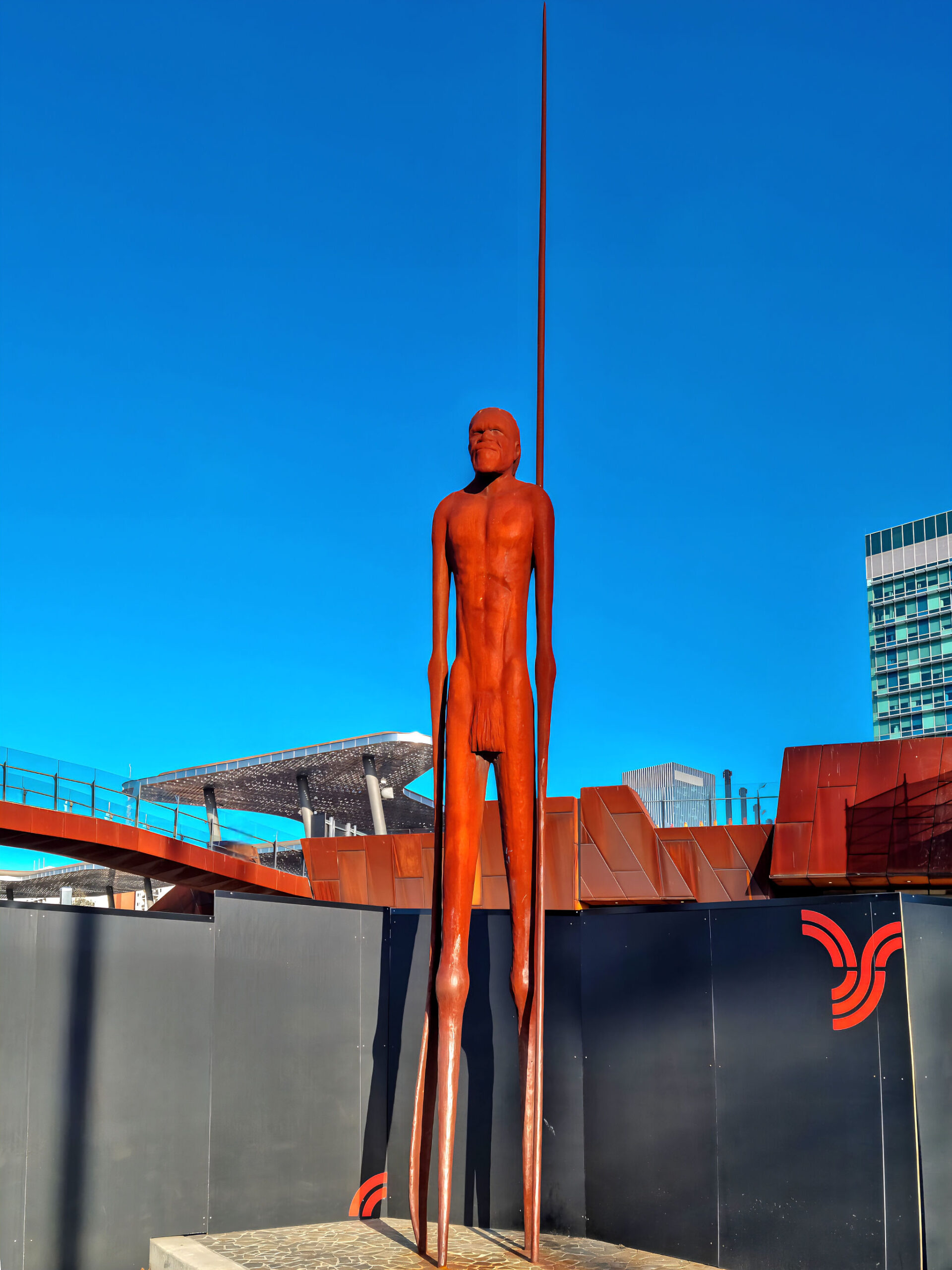
The aftermath of the hunt is a ritual of profound reverence. As the giant draws its final breath, I kneel, placing bloodied hands upon its flank. My primeval self understands that we are forged from the same stardust and bound by the same Dreaming tracks. The animal has surrendered
its flesh so my clan may endure; in turn, its spirit recedes into the land’s ancestral reservoir, awaiting its own cycle of rebirth.
Through these vivid fractures of memory, I see reincarnation as the ultimate bridge of continuity. The modern city I inhabit is a fleeting overlay on an unyielding topography. Beneath the concrete, the red earth still calls—and inside my spirit, I am still standing in the brush, weapons raised, utterly at home in the deep time of the cosmos.
The Cosmic Arc: Why Karma is a Boomerang
The law of karma dictates that every action sets off an equivalent reaction—a cosmic principle perfectly mirrored by the flight of a boomerang. When launched, a boomerang does not pierce the air in a straight line. Instead, it rides the contours of atmospheric resistance, carving a wide, cyclical path through space before inevitably returning to its point of origin. This physical journey beautifully maps the spiritual trajectory of the soul.
In this cosmic metaphor, each 360-degree rotation of the spinning blade represents a single incarnation within the cycle of samsara. As the boomerang whirls, its stability, momentum, or turbulence is entirely determined by the intent and angle of the initial release. Similarly, a soul navigating existence accumulates the energy of its choices, thoughts, and deeds. Every revolution is a lifetime spent either gathering merit or generating discord.
The ultimate truth of the metaphor lies in the flight’s conclusion: the inevitable return to the thrower. When the object completes its arc, the one who launched it must catch it. The nature of that reception depends entirely on the history of its flight. A skillful, balanced throw yields a smooth, effortless return. A reckless, violent launch yields a dangerous threat. This is the unyielding law of karma: the energy you send out across lifetimes is precisely what you must catch when the cosmic boomerang returns to your hands.
A roman military tribune in Judea
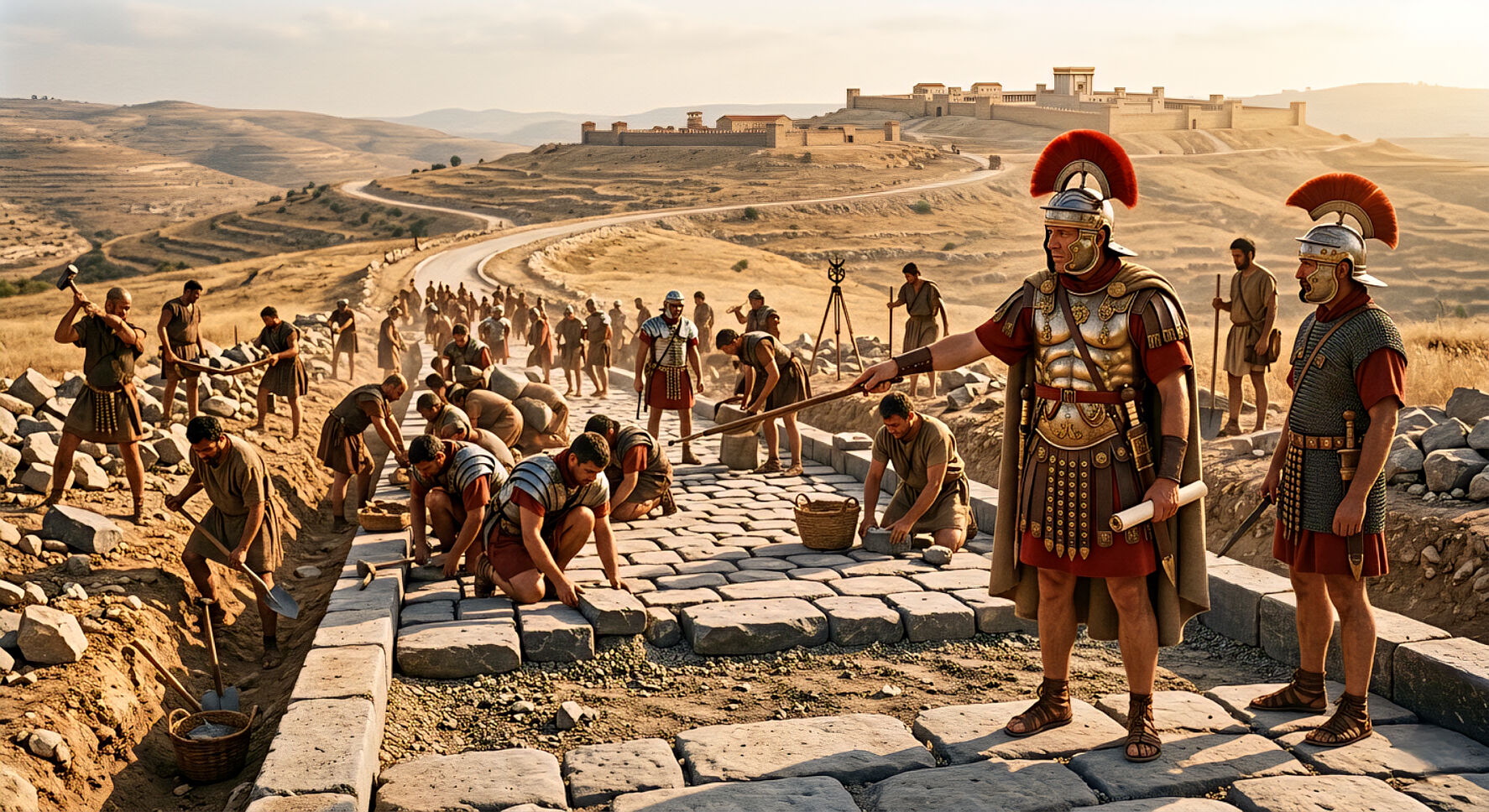
The weight of this stone is different from the marble of Rome. It is cold, stubborn limestone, baked by a sun that feels older than the Republic.
Sometimes, when I am drafting a blueprint in my study or watching the sun set over the Judean hills, a sudden, heavy sense of displacement washes over me. I am a modern man, living in a modern world, yet my hands remember the phantom weight of a silver signet ring and the coarse wool of a patrician tunica. In my mind’s eye, I am not here. I am in Jerusalem, standing atop the rising stone walls of Fort Antonia, squinting through the dust of a province on the edge of revolt.
In that life, I was a Roman Military Tribune, born into the silver-spoon world of the Roman aristocracy. But I was not a politician; I was a man of geometry, iron, and stone. I was a military architect and a siege engineer. My weapon was not just the gladius, but the plumb line, the groma, and the muscle of five thousand legionaries. Under my command, those soldiers cleared mountains to lay dead-straight Roman roads, raised massive aqueducts that forced the wilderness to drink, and built fortifications designed to outlast time itself. Because of my lineage and my trade, the Roman Senate handpicked me for a delicate, miserable assignment: deploy to Judea and fortify Jerusalem under the direct supervision of the Prefect, Pontius Pilate.
My ties to Pilate were tighter than a masterfully laid arch. His wife, Claudia, was my sister.
Living in the governor’s palace, the politics of the province bled into every dinner. For months, the city had been humming with a single name: Jesus of Nazareth. The air in the markets was thick with rumors of this wandering preacher. Some said he was a magician; others whispered he was a king who would cast our eagles into the sea. As a Roman engineer, I dealt strictly in cold variables and physical laws. I didn’t know what to make of a man who supposedly defied those laws. Was he a radical insurgent or a harmless philosopher? Pilate viewed him as a headache. I viewed him as an unpredictable variable in an already unstable equation.
But the most fascinating link to this mysterious preacher came from within our own household. My sister Claudia had struck up an unlikely, intellectually fierce friendship with an extraordinary man named Joseph of Arimathea.
To the local high priests, Joseph was a wealthy noble. To Rome, he was something far more valuable: an Auxiliary Units Commander under our legions. Joseph was a merchant king whose caravan routes were legendary, stretching from the glittering ports of Alexandria all the way across the harsh eastern deserts to the distant, exotic lands around what is today Delhi, India. He brought Claudia exquisite silks, rare spices, and foreign philosophies.
But Joseph was also a pragmatist. To protect his immense wealth across thousands of miles of bandit-infested territory, he employed a private army of highly trained merchant caravan guards. In a brilliant stroke of Roman administration, our military formally recognized these guards as an official Roman Auxiliary unit, with Joseph at their head. He was a man who straddled two worlds—fiercely loyal to his Jewish heritage, highly respected by the Roman military apparatus, and secretly, deeply devoted to his grand-nephew, the preacher Jesus.
Through Claudia and Joseph, the stories of Jesus took on a human, urgent shape in our palace. While I calculated the stress loads of Jerusalem’s new aqueduct, my sister and the merchant commander whispered of a kingdom not made with hands.
I never did find my answers in that lifetime. History tells the story of what happened to the preacher, to Pilate, and to the city we built. But the soul remembers what the history books leave out—the quiet tension of a Roman engineer caught between the unyielding stone of the Empire and the invisible, unstoppable force of a turning tide.
An Architect & engineer at Rome’s coliseum
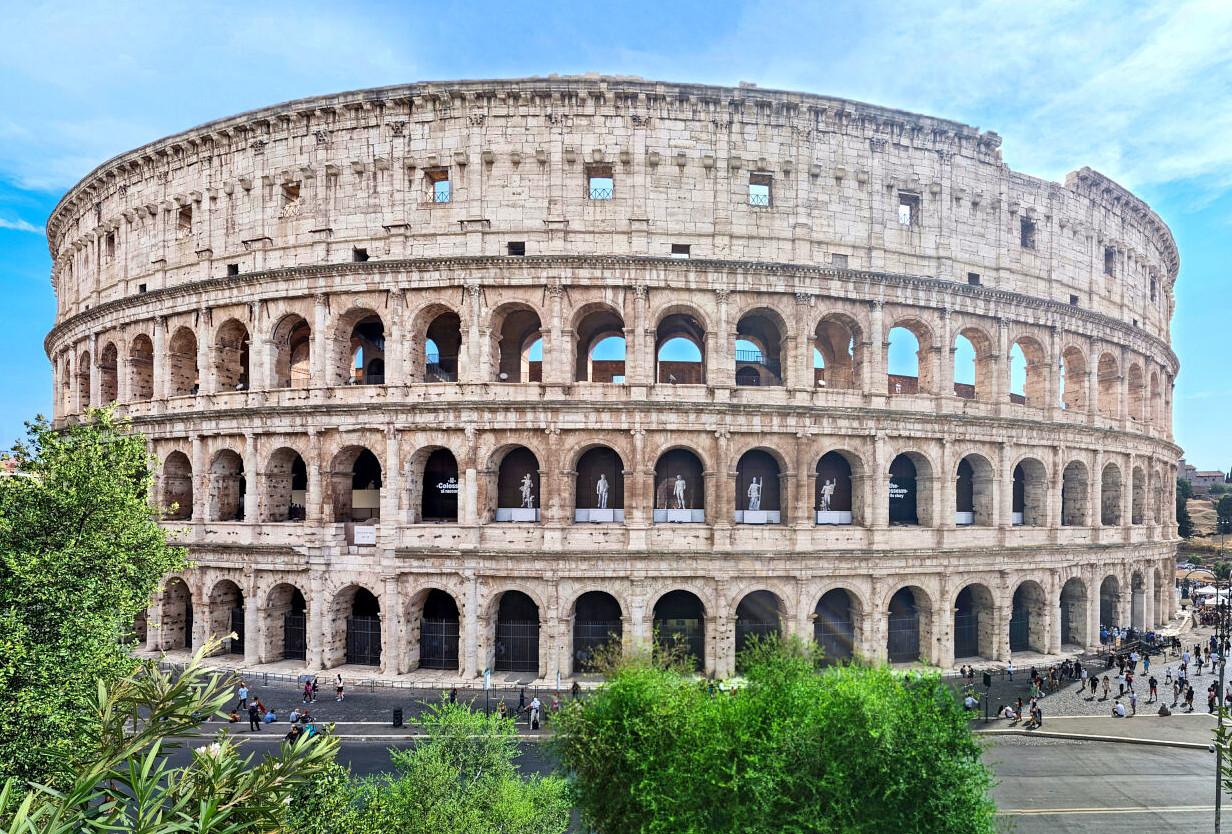
I have always known that this current life is not my first. There are moments—when the smell of sawdust, wet sand, and hot iron hits me, or when the heavy groan of a winch echoes across a modern construction site—that the veil thins. For a fleeting second, I am no longer standing in the twenty-first century. I am pulled backward through time, anchoring squarely in the dust, blood, and brilliant math of the Flavian Amphitheater.
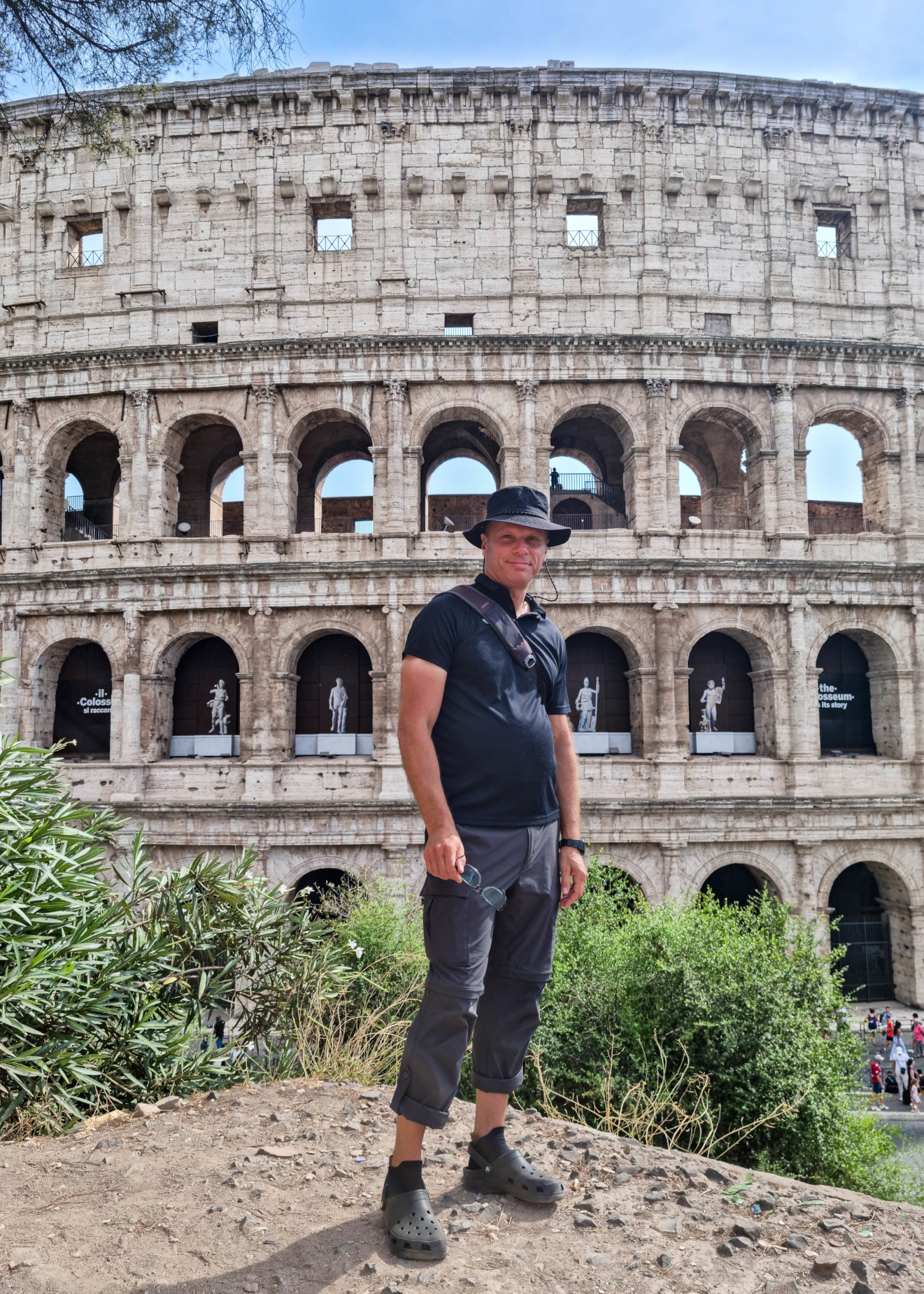
In that past life, my name was Callias. I was a Greek, born to a lineage of architects, but reduced by the tides of war to a commodity. I was a slave in the heart of Rome. Yet, my fate was distinct. I was owned by a wealthy, highly placed Patrician named Lucius Cornelius Macedo.
Lucius was a man of immense influence and subtle sensibilities; recognizing my education, he did not send me to the quarries. Instead, he placed me in charge of his vast estate, his ledgers, and his money. Because I administered his properties with absolute precision, he granted me liberties few Roman slaves could dream of. He looked upon me not as mere property, but with the quiet affection a man might show a clever, trusted son.
But it was by his appointment and political backing that I found my true, harrowing purpose in Rome. I was sent to design the mechanical soul of the Colosseum.
Down in the dark, suffocating humidity of the hypogeum—the sprawling labyrinth of tunnels beneath the arena floor—I was an architect of illusions and death. My mind was consumed by the physics of ropes, counterweights, and bronze gears. I designed the heavy wood-and-iron elevators that could lift a fully grown African lion from the darkness into the blinding sunlight of the arena. I built the hidden ramps that deployed seamlessly from the walls, the automatic opening cages, and the concealed trapdoors that made gladiators appear to materialize out of thin air to the delight of eighty thousand screaming spectators.
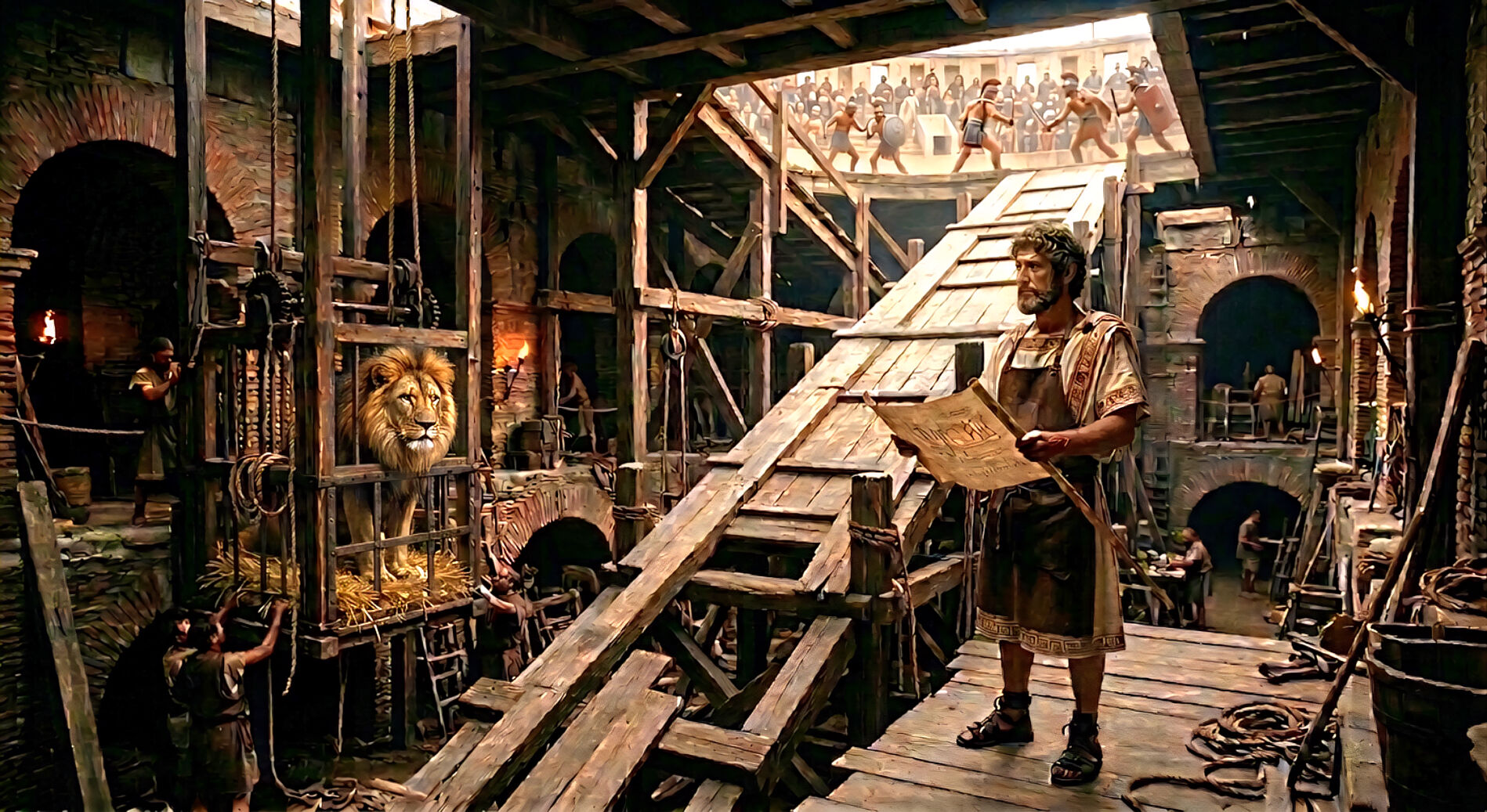
To the crowds above, it was magic. To me, it was a profound internal crisis.
The Roman state had entered a dark, paranoid era, turning its full bureaucratic fury against a growing sect: the Christians. For the crime of refusing to worship the Emperor, they were brought to my arena in waves.
I hated those days. My machinery, built with the pure geometry of Greek engineering, became the delivery system for slaughter. I watched from the wings as innocent men, women, and children were brought out. Some were thrown to the very lions my elevators carried upward. Others were tied to stakes and burned alive, their screams echoing off the travertine walls, while some were forced to hold wooden swords against heavily armored, professional gladiators—a spectacle that meant nothing short of swift, guaranteed execution.
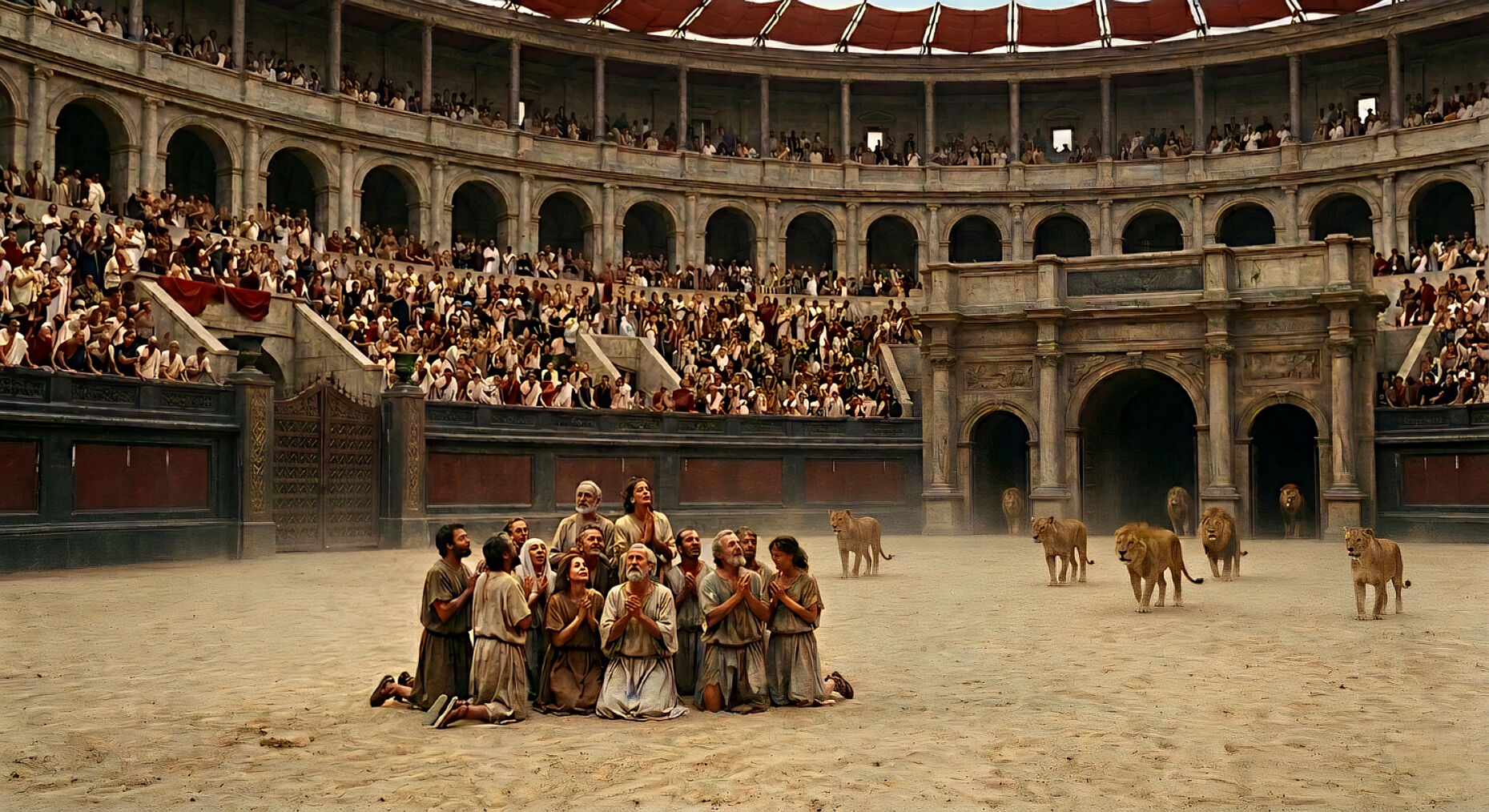
Day after day, I watched the horror of my creations. I despised the moments when these Christians were brought into the arena to be eaten by lions, burned alive as human torches, or forced to fight professional gladiators in matches that meant certain death. In the damp tunnels beneath the stage, I walked among them before they ascended. I spoke with, and deeply pitied, many who would later be canonized as saints and martyrs, marveling at a faith I did not share but deeply respected.
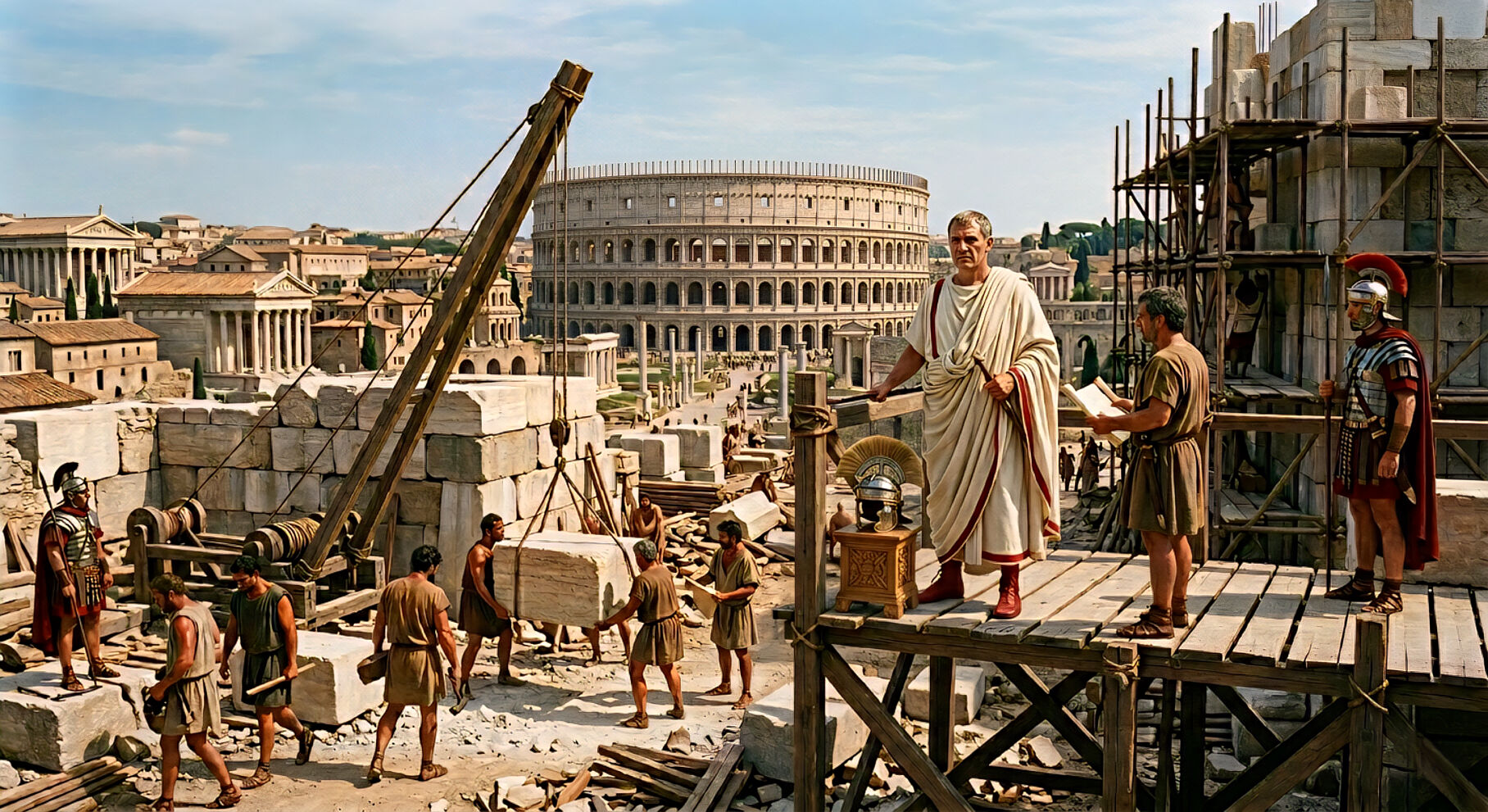
Yet, in that horrific darkness, I met the remarkable. Down in the holding cells, awaiting the noon games, I spoke with people who would soon be recorded as saints and historic martyrs. I expected to find terror, but instead, I found a terrifying peace. I remember an elderly man, his hands calloused from prayer, who looked at me with deep pity—not for himself, but for me, the man pulling the levers. Their quiet dignity and refusal to break,
even as the beasts roared beneath the floorboards, shook me to my core. I was the free intellect trapped in a slave’s body; they were the chained bodies possessing an untouchable, absolute freedom.
Years bled into one another until the day Lucius, my master, passed away.
In his final will, he granted me the one thing money could not buy: my manumission. I was made a free man. But he went further, leaving me a small fortune in coin and a valuable villa just outside the city walls. Suddenly, the enslaved Greek engineer was a wealthy man of independent means.
I felt no loyalty to Rome’s bloody stone walls. I immediately sold the villa, converted the estate into portable gold, and boarded a merchant vessel bound eastward. I returned home to Greece.
I spent the remainder of that lifetime living in absolute luxury in Athens, far from the roaring crowds and the smell of blood on the wind. I bought a home looking out toward the Acropolis, filling it with scrolls, music, and quiet philosophy. I lived out my days in peace, using my wealth to buy comfort, but my mind never truly left the underbelly of the amphitheater. Even now, centuries later, I can still feel the tension of the ropes, the weight of the bronze keys, and the lingering grace of the martyrs who walked over my trapdoors into eternity.
A Roman Military Tribune in Rome
The textbook they handed me at the Catholic academy was supposed to be a prize, a reward for a lucky row of numbers on a bingo card. It was a slim, leather-bound volume chronicling the life of St. Agnes of Rome. My classmates flipped through theirs with the detached boredom of schoolboys, but the moment my fingers touched the cover, a heavy, suffocating wave of déjà vu crashed over me. I didn’t need to read the pages. I already knew every word, every horror, and every miracle recorded inside.
I knew it because I was there.
In a life my modern mind was never supposed to remember, I was a Patrician of the highest order, elevated by the Roman Senate to oversee the physical reconstruction of the capital. Rome was at its zenith, the massive shadow of the freshly completed Flavian Amphitheatre dominating the skyline. As a Military Tribune, my mind was defined by geometry, iron, and stone. I was an architect and engineer of the Empire. My days were spent commanding legions of slaves, cutting straight roads through wild terrain, mastering gravity with towering aqueducts, and erecting the marble public buildings that defined the eternal city. I dealt in the absolute truths of mathematics and structural integrity.
But Rome, for all its structural perfection, was rotting with paranoia. It was a time of ruthless state executions, a period when the Empire turned its fury upon a growing underground sect: the Christians.
As a Patrician, I was close friends with a noble family who had a daughter named Agnes. I had known her since the day she was born. By the time she was thirteen, she possessed a quiet, unshakeable grace that terrified the Roman authorities. She had refused every suitor, declaring she was already betrothed to a husband she called Jesus Christ. For this, the state hunted her.
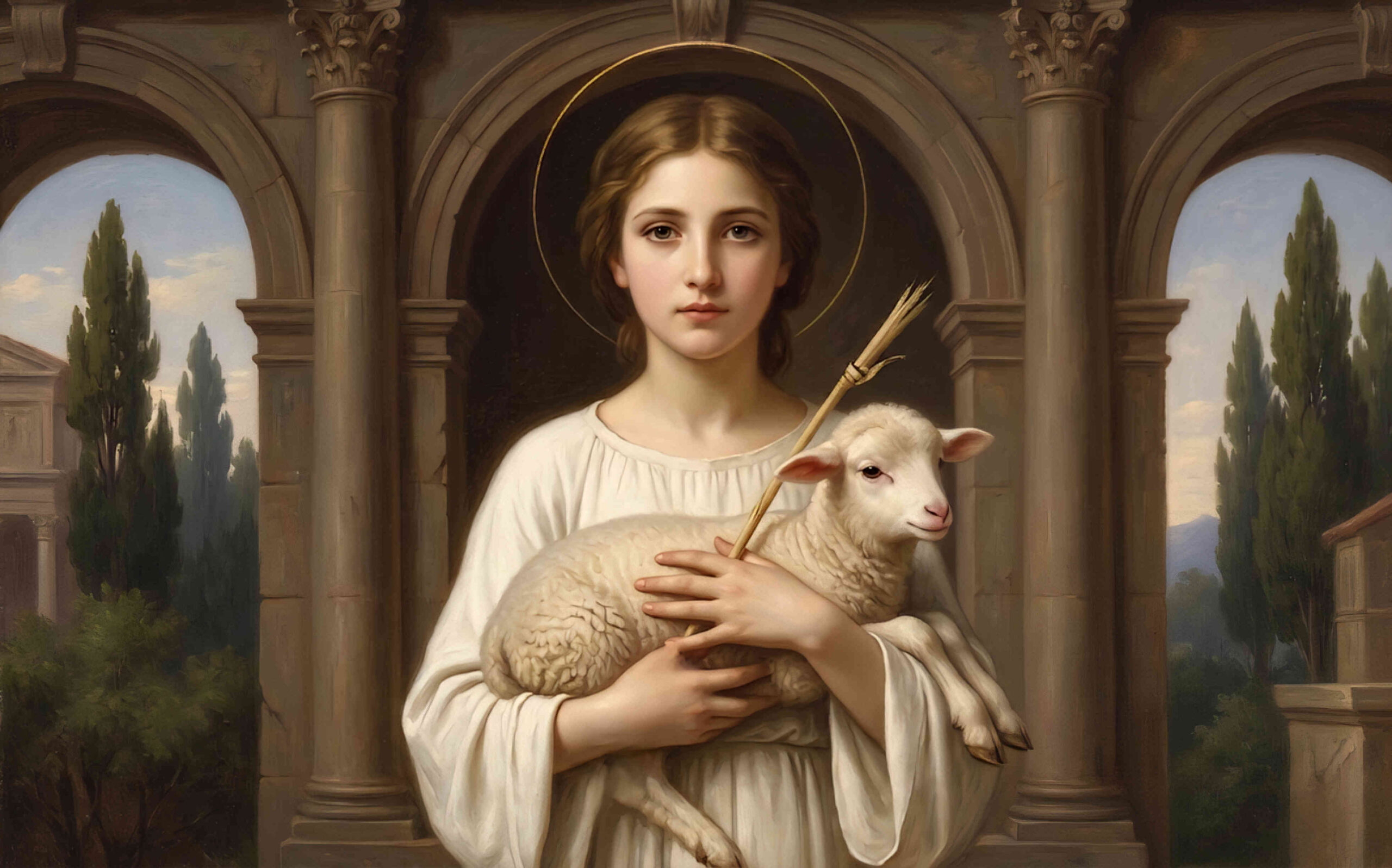
Then came the events the books call miracles, but which I saw shake the very foundations of my rational world. When the state sought to humiliate her, stripping her naked to be paraded through the streets by coarse Roman legionaries, I watched in utter disbelief as her hair suddenly grew with impossible speed, cascading down to cover her body like a thick mantle. When the magistrate condemned her to a brothel to be violated by the city’s male population, an inexplicable, foul odor began to emanate from her—a scent so wretched and terrifying that no man could step within a yard of her. She was thrown out of the brothel, untouched.
Other miracles occurred across the city, wonders I did not witness firsthand, but the public reaction was uniform. Terror morphed into rage. The citizenry denounced her not as a holy woman, but as a malignant witch. Ultimately, the Emperor himself signed her decree, condemning the thirteen-year-old to death for the crime of Christian witchcraft.
They sentenced her to torture and the stake. I knew she was no witch. I had watched her grow from a infant. The wonders she performed were not maleficium, but standard acts of devotion to the deity she claimed as her husband.
On the day of her execution, the air in the square was thick with heat and malice. Agnes was bound to the stake, the wood piled high at her feet. The executioners began their cruel work, torturing her small frame before lighting the kindling. The crowd cheered for blood.
I stood there in my full, gleaming Military Tribune uniform, my heart tearing in two. I lacked the political power to overturn a direct imperial decree; I could not save her life. But I possessed the military authority to command the execution square. I could grant her mercy.
Breaking rank, I stepped forward toward the flames, drawing my heavy bronze gladius from its sheath. The soldiers fell back, respecting my rank. I looked down into her innocent face, the heat of the rising smoke beginning to blur the air between us.
“Today you feast in the house of your husband, Lord Jesus Christ,” I whispered to her, my voice steady despite the chaos around us. “Say hello from my part to him. He knows who I am from our times in Galilee.”
With a swift, practiced motion born of years in the legions, I drove the blade deep into her throat.
It took less than thirty seconds for her to bleed to death, sparing her the agony of the fire. But in the second before the blade struck, she looked at me. The expression in her eyes—an incomprehensible mix of absolute peace, gratitude, and ancient recognition—seared itself into my soul.
Two thousand years have passed, empires have crumbled into dust, and I have been reborn into a completely different world. Yet that look has never left me. It remains etched into my spirit, as permanent as the Roman stone I once laid, a bridge connecting my forgotten past to the fragile reality of my present life.
A Viking naval Engineer and Merchant
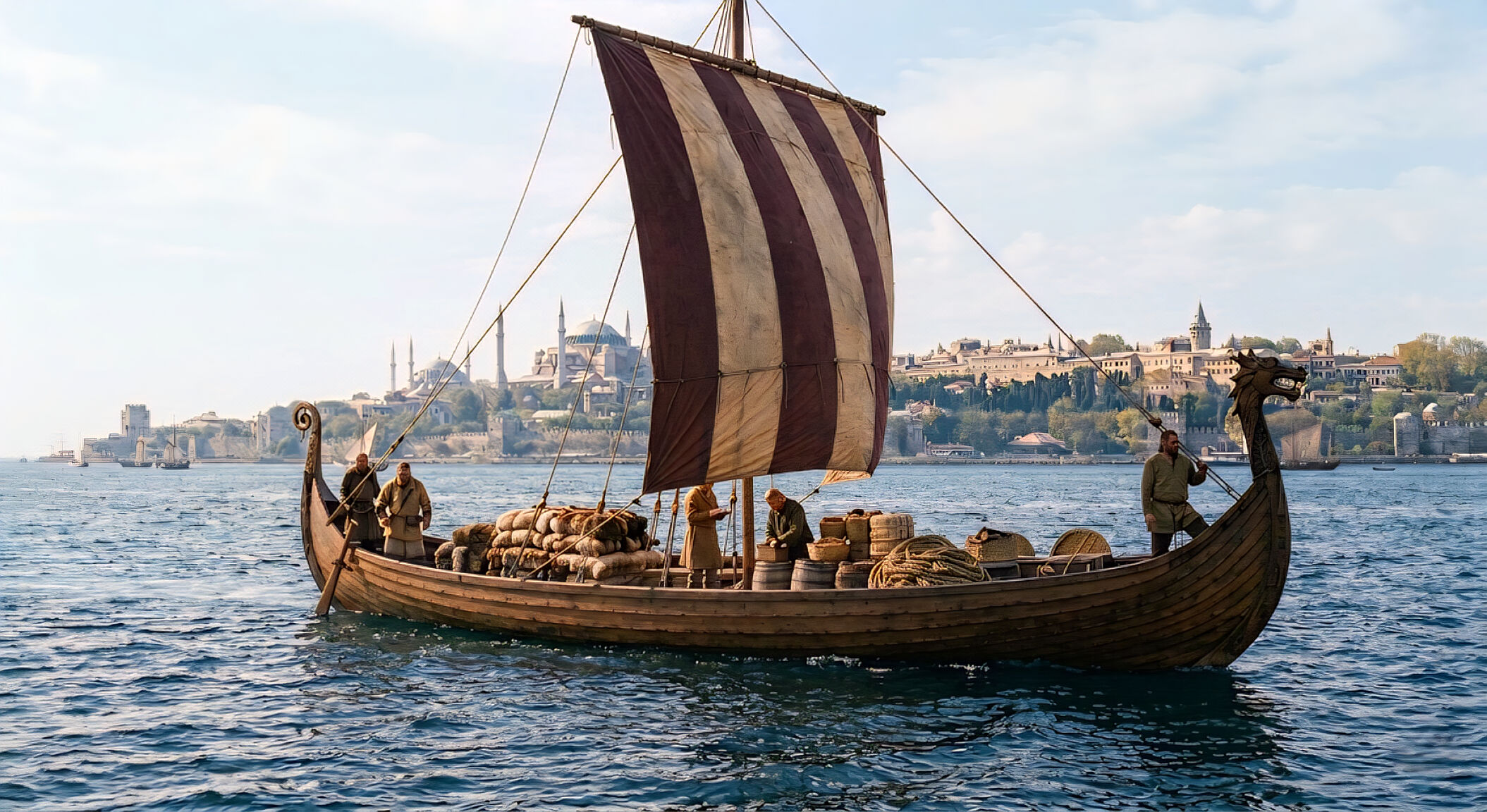
In this life, I sit behind a modern desk, staring at blueprint schematics on a glowing monitor, listening to the hum of traffic outside my window. Yet, whenever I close my eyes and let my mind drift, that artificial hum transforms into the rhythmic, thunderous rush of white-water rapids and the distinct, deep creak of shifting oak. I have always known that my soul carries the weight of a different era. Long before I drew breath in this century, I was a man of the north—a master of timber and trade who anchored his fate not in the smoke of burning monasteries, but in the wealth of the great rivers of the East.
It was the tenth century, a time when the winds of fortune drove our people across the world. While my kinsmen and neighboring clans packed their shields tightly into war-boats to raid the fractured kingdoms of Britannia and storm the green coasts of Normandy, my eyes looked in the opposite direction. I was a naval engineer by birthright and a merchant by ambition. To me, a ship was not merely a vessel for war, but a living, breathing paradox: it had to be strong enough to withstand the crushing waves of the Baltic Sea, yet shallow and agile enough to skim across treacherous riverbeds deep within the European interior.
I crafted the very longboats that cut through those waters, including the flagship I proudly piloted as boat captain. I selected the oaks myself, splitting the logs along the grain to preserve the wood’s natural elasticity, and fashioned flat-bottomed hulls that drew less than three feet of water even when heavily laden with cargo. And heavily laden they were. Before setting sail from the cold coastlines of the Varangians, I spent months accumulating the finest Northern commodities: deep-golden Baltic amber, thick pelts of fox and sable, mounds of clean animal wax for church candles, and slaves. My route was planned meticulously, mapped out in the hard-earned geography of my mind—the legendary river trade route from the Varangians to the Greeks.
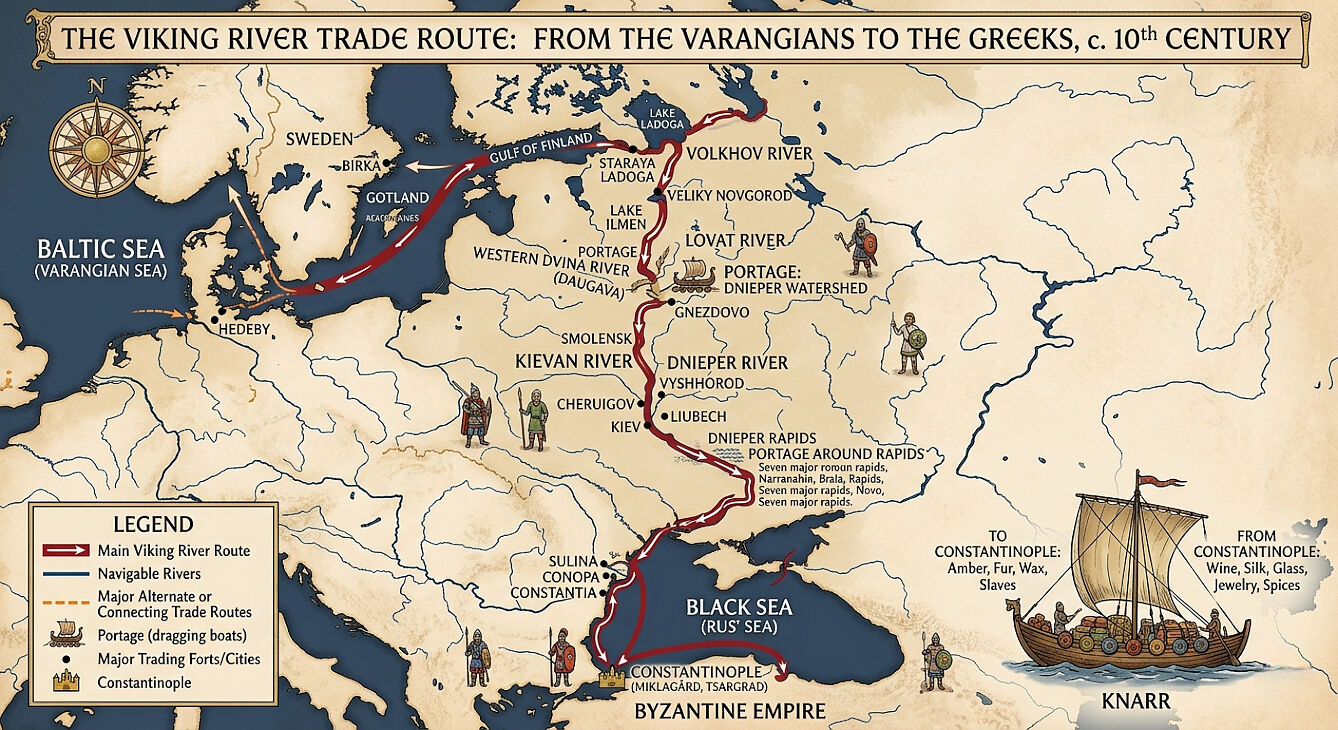
We did not travel alone. Our journey was a massive, cooperative enterprise, joined by a grand flotilla of ships from other Viking clans who relied on my engineering and navigation to survive the gauntlet. Traveling along the rivers was a relentless battle against nature and man. We navigated roaring rapids where a single miscalculation would splinter a hull against jagged rocks. In the worst stretches, we had to perform the brutal, back-breaking labor of portage—hauling both our massive ships and our heavy crates of merchandise over dry land on wooden rollers, constantly exposed to the arrows of local raiders. Even when the rivers were calm, local warlords emerged from the tree lines, demanding heavy trading tariffs just to grant us safe passage.
On other occasions, I charted courses down the great Volga River, trading smoothly with the cultures settled along its banks and linking our northern world to the vast silk networks of Asia. But the true crown jewel lay at the end of the Dnieper, across the black, swelling expanse of the sea. Rising from the horizon like a mountain of stone and gold was Constantinople—Miklagard, the Great City.
Over the decades, I made this perilous voyage so many times that my face and my ships became a fixture to the Byzantine empire’s government. They knew me not as a savage raider to be feared, but as a shrewd, reliable merchant prince to be welcomed into the imperial markets. In Constantinople, I bartered our northern goods for the true luxuries of the world: rich, dark wines, shimmering bolts of Byzantine silk, delicate blown glass, exquisite jewelry, and aromatic spices.
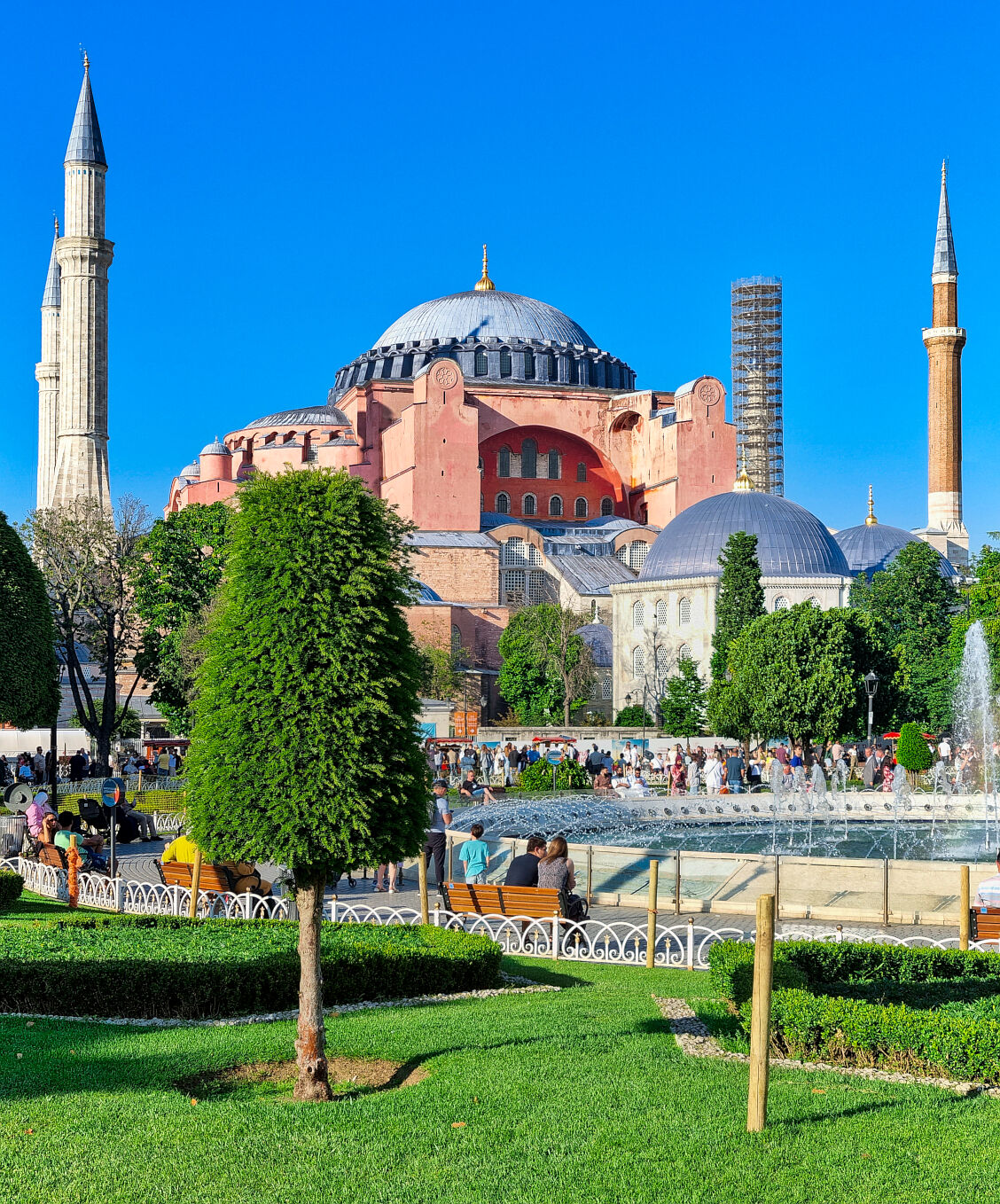
Returning home to Scandinavia with these treasures, I amassed a fortune that eclipsed anything my clan members brought back from their bloody campaigns in Western Europe. While they risked their lives for silver pennies and scorched earth in
England and France, my river routes yielded an overflowing bounty of gold, luxury, and prestige. The memories always fade out the same way—with the taste of river salt on my lips, the sun setting fire to the dome of the Hagia Sophia, and the absolute certainty that I had tamed the wildest waters of the earth. I am an engineer today because I was an engineer then.
The water still calls to me, a quiet echo of a past life when I mapped the world with an iron will, a well-placed sail, and an unbreakable hull of oak.
Centuries of Reincarnation as A knight Templar
They say energy cannot be destroyed, only transformed. For me, that transformation has always been a loop. Today, I live a quiet life in the United States, but beneath my modern skin lies an ancient Basque heritage, and beneath that heritage lies a recurring destiny. On my left hip, just above the bone, sits a distinct, dark birthmark. To a doctor, it is a hyperpigmentation; to me, it is the precise mark where a French steel dagger found the gap in my chainmail seven hundred years ago.
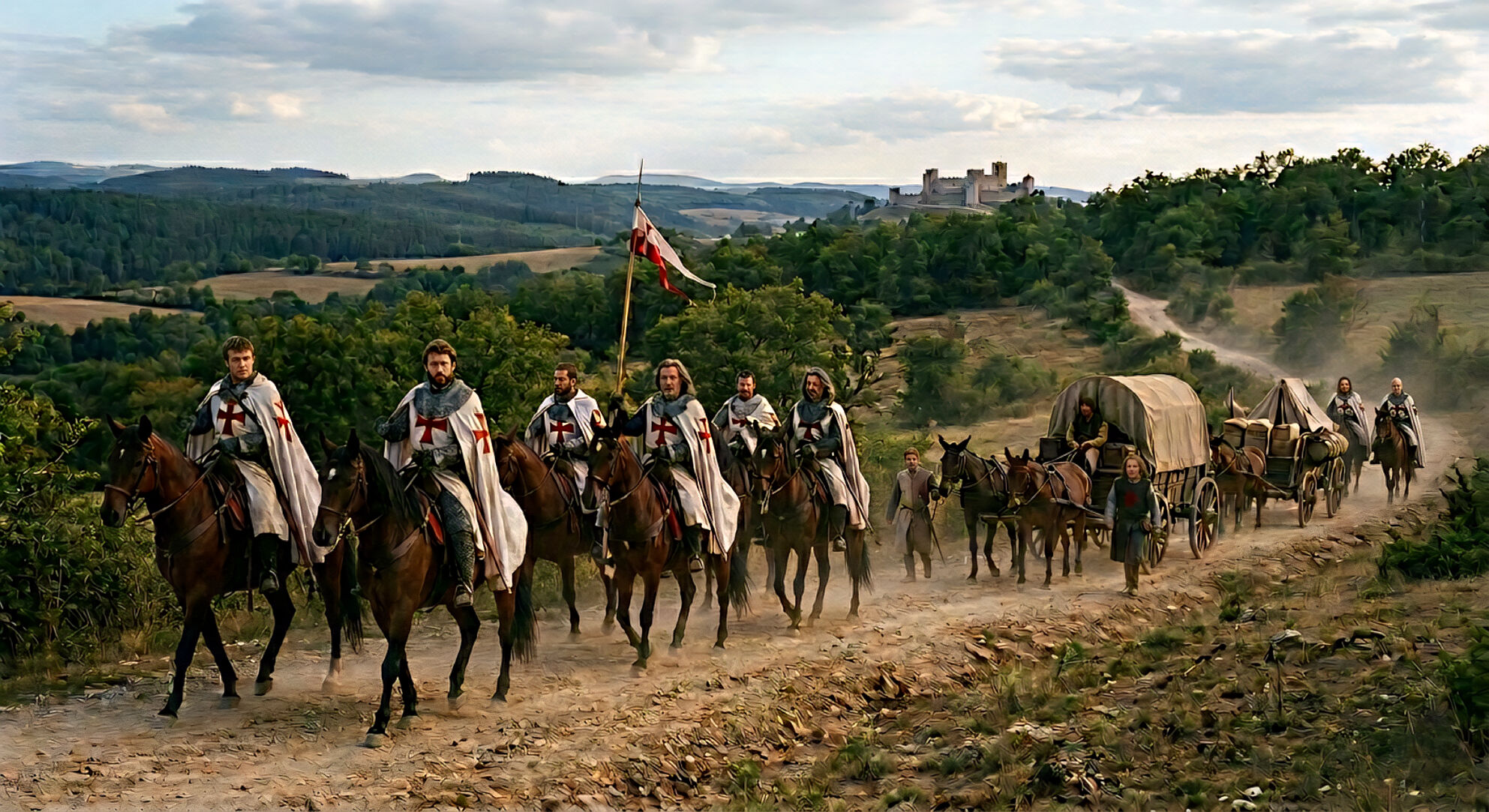
For consecutive lifetimes, I was trapped in a sacred cycle, born into a noble Basque family in the South of France with ties to the French royalty. In each rebirth, the calling was identical. I was drawn relentlessly to the study of geometry, stone, and warfare, eventually being tonsured and sworn into the Poor-Fellow Soldiers of Christ and of the Temple of Solomon—the Knights Templar. I was not a front-line cavalryman, but a military architect and siege engineer, a master of fortifications bound by a holy vow.
Our grand mission was the safeguarding of Christendom’s vital arteries: the immense pilgrim routes stretching across Europe. My duties kept me perpetually on the move, usually traveling in a tight, efficient unit of eight Templars—four squires, myself, and three other military architects. We staggered our tasks along the highway, alternating assignments and catching up with one another at designated commanderies down the road.

Together, we built the infrastructure of faith and survival. We mapped, expanded, and reinforced heavily fortified waystations to provide lodging, food, and
absolute security to pilgrims. The route was grueling and vast.
To support this massive network, my skills were split between the martial and the miraculous. I designed vast farmland infrastructure—granges, mills, and irrigation systems—to ensure the Templar Order could feed both its army and the endless streams of travelers. I spent quiet seasons coordinating the renovation of Romanesque and early Gothic churches, ensuring the spaces reflected the divine geometry of heaven. Furthermore, we implemented history’s first true banking network. A pilgrim could deposit silver in Spain or France, receive a coded banknote from us, and safely withdraw funds at any of our fortifications along the route, rendering highway robbery useless.
But a loop, no matter how grand, eventually shatters. In the early 14th century, King Philip IV of France, fueled by debt and jealousy, turned on us. When our Grand Master, Jacques de Molay, was imprisoned on fabricated, heretical charges, my companions and I refused to stand by. We orchestrated a desperate, clandestine rescue attempt to break him from his dungeon.
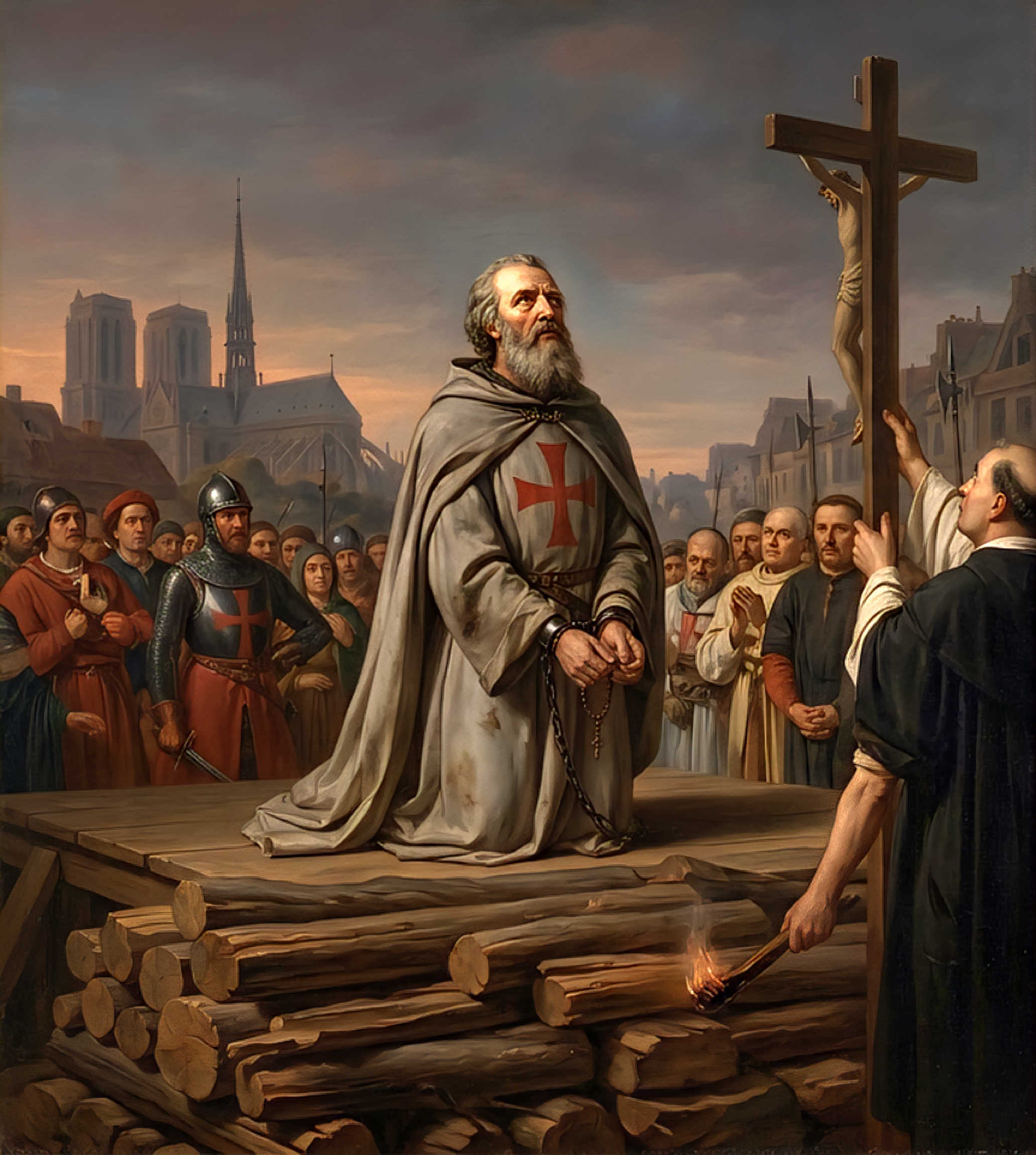
We were betrayed. In the damp shadows of a French alley, an ambush cut us down. I remember the clash of steel, the rain on the cobblestones, and the sudden, white-hot agony just above my left hip as a long dagger slipped perfectly between the rings of my armor. As the darkness took me then, the loop finally broke, hurling my soul across centuries and oceans to the modern West. Yet, every time my fingers brush that birthmark, I am reminded that the stone, the roads, and the brotherhood still run in my blood.
A military Architect Samurai in Medieval Japan
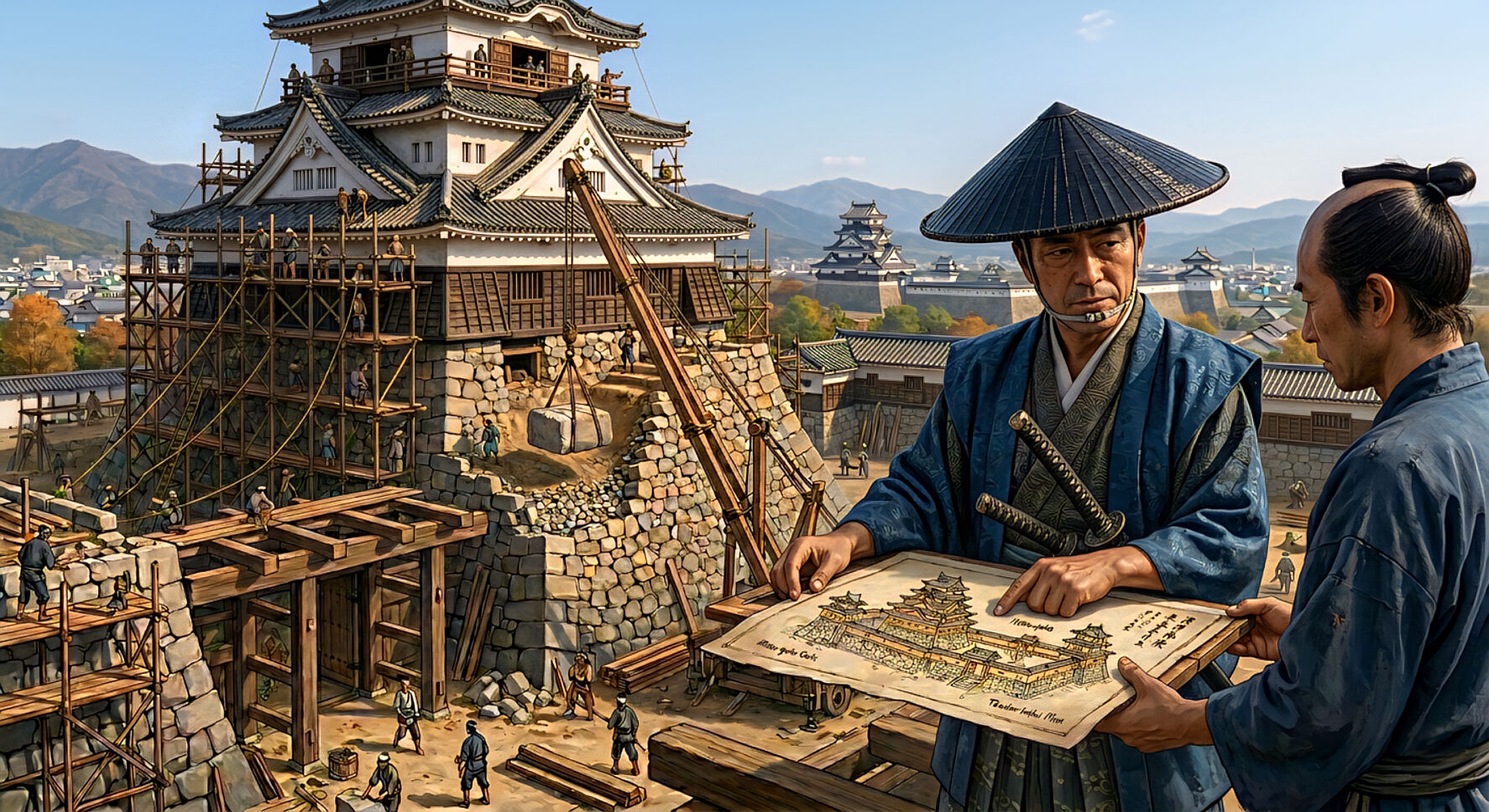
The scent of fresh cedar wood always triggers the memory. It begins with the precise, mathematical angle of a roofline, followed by the heavy, rhythmic thud of stone being hoisted into place. Most of my remembered lives are anchored in the West—dusty European scriptoriums, Roman aqueducts, the loud iron-works of the Industrial Revolution. But there is one exception. A single, distinct life recorded in an Eastern philosophical setting, almost as if the Buddha himself intended for me to touch that corner of existence to truly understand the architecture of the mind.
In that life, during the bloody heights of Japan’s medieval era, I was a ronin. I carried the two swords of the samurai, but I wore no clan crest. I bowed to no single master, pledged no unyielding loyalty to a lone daimyo. Instead, I was a master of military architecture, an independent contractor of war and peace in a land consumed by fire.
To the lords of the provinces, a lone samurai without a master was usually an object of suspicion or pity. To me, it was a position of immense leverage. The Sengoku period was an era of endless siege and paranoia; every lord needed a stronger wall, a trickier gate, a higher keep. Because I refused to bind myself to one clan, I could serve them all. I kept my independence precisely because it was bad business to be partisan. I earned far more by remaining a neutral node of expertise, designing fortifications for rival clans who, in any other arena, would have slaughtered each other on sight.
My work was a delicate dance between brutal pragmatism and profound spiritualism. A fortress, after all, is just a giant mandala meant to protect the mortal body. When expanded or renovated a stronghold, I did not just pile stones; I built labyrinthine defenses designed to disorient and trap attackers. The winding paths, hidden drop-points, and deceptive sightlines were physical manifestations of the illusions that plague human perception.
Yet, within those terrifying military structures, I always wove the serene threads of Buddhist motifs and aesthetics. I designed sprawling gardens where a weary warlord could contemplate the impermanence of his own rule. Streams flowed past defensive battlements, and dry stone gardens (karesansui) sat in the shadow of massive watchtowers. The architecture whispered a paradox: a fortress is built to withstand the ages, yet everything—even the stone beneath our feet—ultimately crumbles to dust.
I lived that life on the edge of a blade, trusted by everyone yet belonging to no one. Looking back through the centuries, I realize it wasn’t just about building castles. It was a lesson in detachment. By serving everyone, I bound myself to nothing, finding a strange, quiet enlightenment amidst the blueprints of war.
A Century of Reincarnation as a French Knight
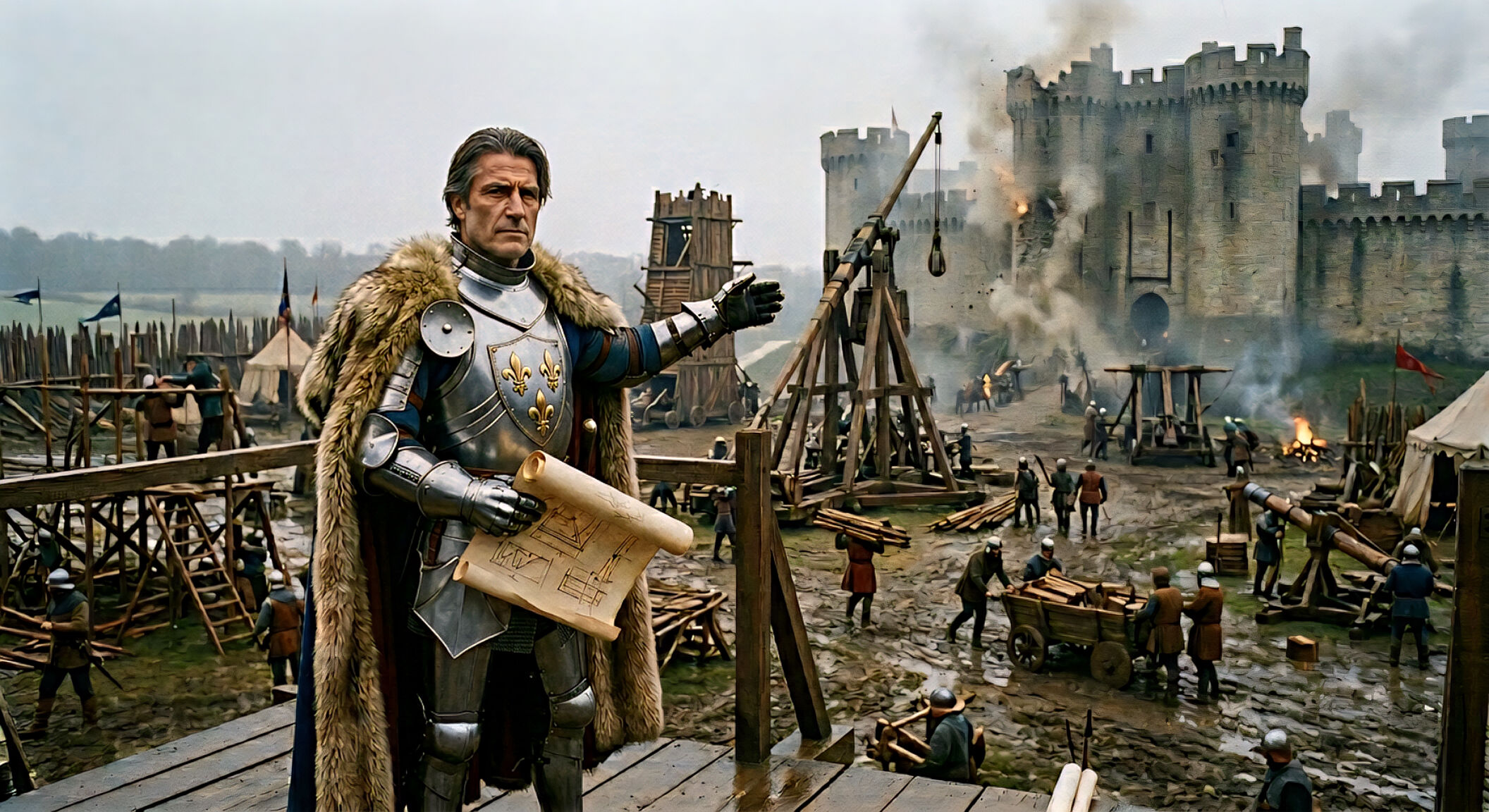
I live a quiet life in the United States today, though I am not an American. My roots and my loyalty remain tied to the rugged, ancient Basque country of northern Spain, the ancestral cradle of my bloodline. Most people around me see only a foreign resident navigating a modern country, but when I close my eyes, I don’t see the American skyline. I see stone. I see the heavy grey granite of curtains and bastions, and I smell the damp, metallic tang of cold mud and black powder.
For nearly a hundred years, my soul was trapped in a repeating loop across the Atlantic. Throughout the brutal span of the Hundred Years’ War (1337–1453), I lived through a few cycles of reincarnation. I was always born to a family of the French aristocracy with deep Basque roots in the South of France, always answering the call of the French Crown, and always carrying the same innate gift: the ability to read a stone fortress like a map of human vulnerability.
In my most prominent lifetime during that bloody century, I served as a Military Architect and Siege Engineer. My days were consumed by geometry, physics, and stone. When the English forces occupied our lands, my duty was twofold: I was the man they called to rebuild shattered walls, dig deep defensive ditches, and expand existing fortifications into impenetrable strongholds. But when it was time to push the English out, my role reversed. I became the coordinator of destruction, calculating the exact trajectories for trebuchets and early bombards, plotting subterranean mining tunnels to collapse enemy towers, and planning the precise execution of sieges against heavily fortified English occupations.
It was exhausting work, a grinding war of attrition that felt like it would never end. And then, in 1429, everything changed.
I remember the day I first met Joan of Arc. By that point in the war, France was bleeding out, and the city of Orléans was under a suffocating English siege. Word reached our camp of a peasant girl from Domrémy who claimed to hear the voices of saints, sent by God to lift the siege and crown the Dauphin, Charles VII. When she arrived, clad in white armor, I was deeply cynical. To an engineer trained in mathematics and cold logistics, she looked like a bratty girl—a mere tool being used by the French high command as a psychological warfare weapon to manipulate the superstitious minds of desperate soldiers.
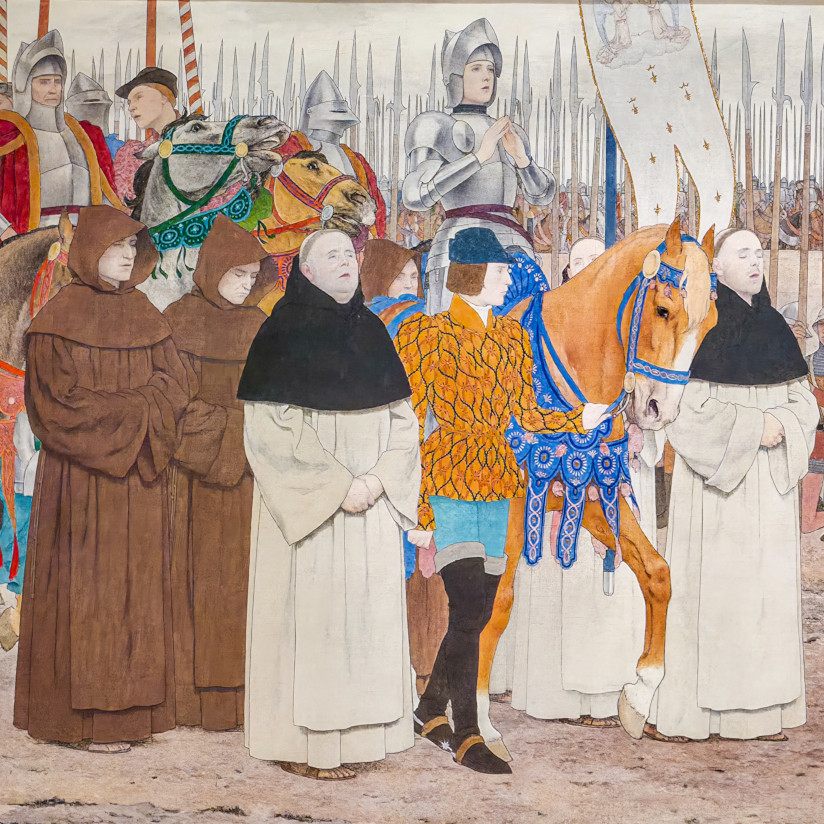
But then I actually worked with her.
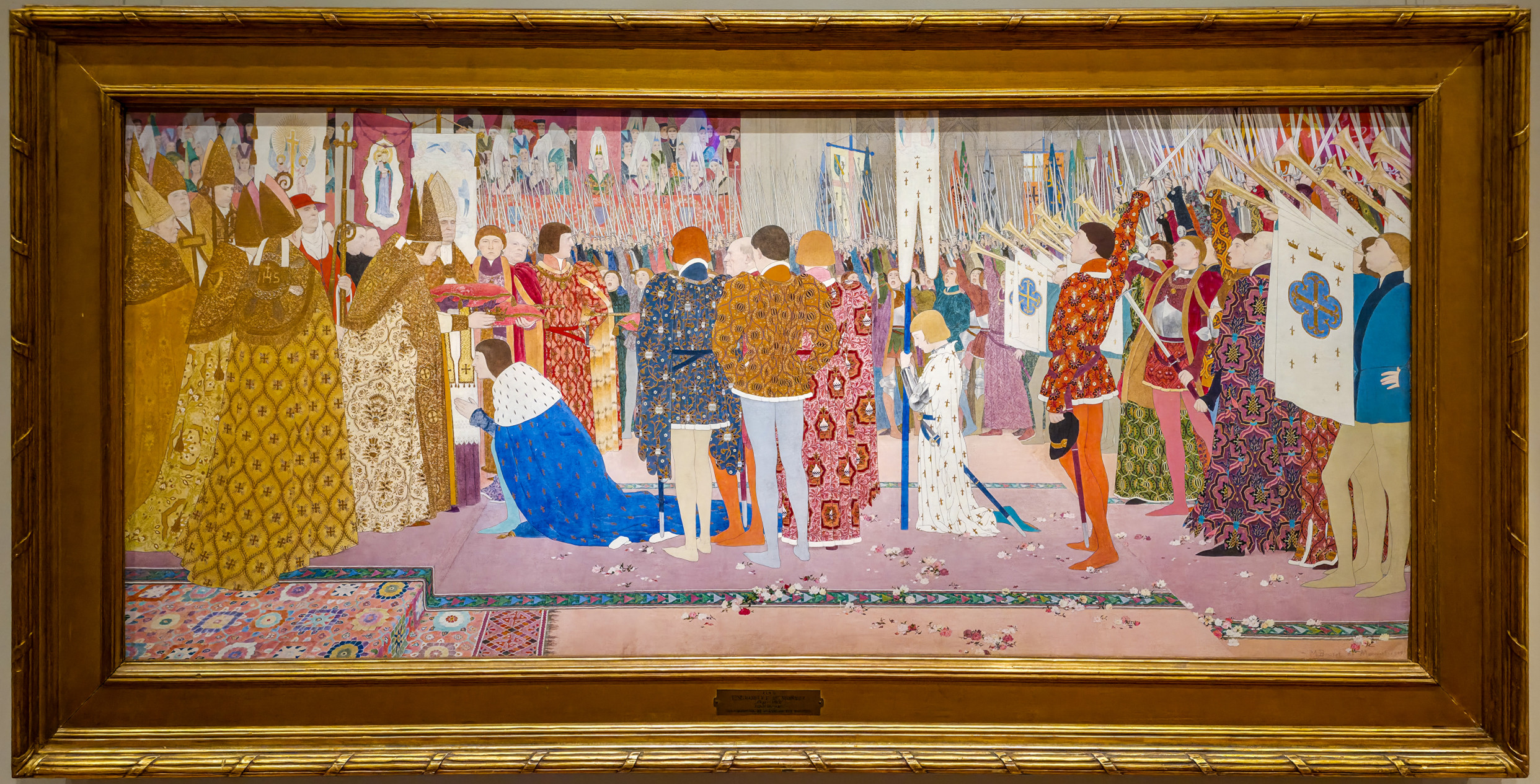
Joan was no mere symbol. Over the intense months that followed, I collaborated directly with her and top French generals like the Duke of Alençon and Dunois. I watched her look at maps of fortified English positions—places like the formidable Les Tourelles at Orléans—and display a terrifyingly brilliant, intuitive grasp of battle. Where seasoned commanders hesitated, she urged decisive, aggressive action. She didn’t know the mathematical physics of a trebuchet, but she knew where the enemy’s spirit would break. My cynicism melted into profound respect, and then into a fierce, protective loyalty. Her presence completely altered the course of the history we were writing; she turned a broken, defensive French army into an unstoppable liberation force, successfully breaking the siege of Orléans and clearing the way for the King’s coronation at Reims.
But light that bright always draws the shadows. In 1430, Joan was captured by the Burgundians at Compiègne and sold to the English. They put her on trial in Rouen, accusing her of heresy in a rigged politically motivated court led by pro-English clergy.
When word reached us of her imprisonment, a handful of my companion knights and I refused to let her burn. We assembled a desperate, covert rescue party, pushing our horses to the brink of collapse as we rode hard toward Rouen. Our scouts brought conflicting, agonizing reports: at one point, facing the threat of immediate execution, Joan had signed an abjuration—a submission to the church that effectively granted her a pardon from the death penalty, commuting her sentence to life imprisonment. We thought we had time.
We were wrong. Trapped in her cell, manipulated by her guards, and choosing to stay true to her divine voices, she recanted her submission and put her male clothes back on for protection. The English court instantly declared her a relapsed heretic.
We were still miles away, coming through a ridge that overlooked the valley of Rouen, when the trap sprung shut. We were too late. Through the morning mist, there was no time to react, no time to charge the gates. From the distance, rising high above the city marketplace, we saw it—a thick, black column of smoke winding its way into the heavens from the stake where Joan was being burned alive.
The silence that fell over our rescue party was heavier than any stone fortress I had ever built. She died a captive of her enemies, but the fire they lit only immortalized her. Decades later, a papal court retrial cleared her name, and centuries after that, she was officially canonized as a Saint of the Catholic Church.
I survived the war, seeing the English finally driven from France, before my soul slipped back into the ether to eventually awaken in a world of concrete and steel. Yet, even now, when I see a column of smoke on a distant horizon, my mind slips back to the 15th century, remembering the brave, defiant Maid of Orléans whom I once had the honor to fight alongside.
An Engineering Officer During the Napoleonic Wars
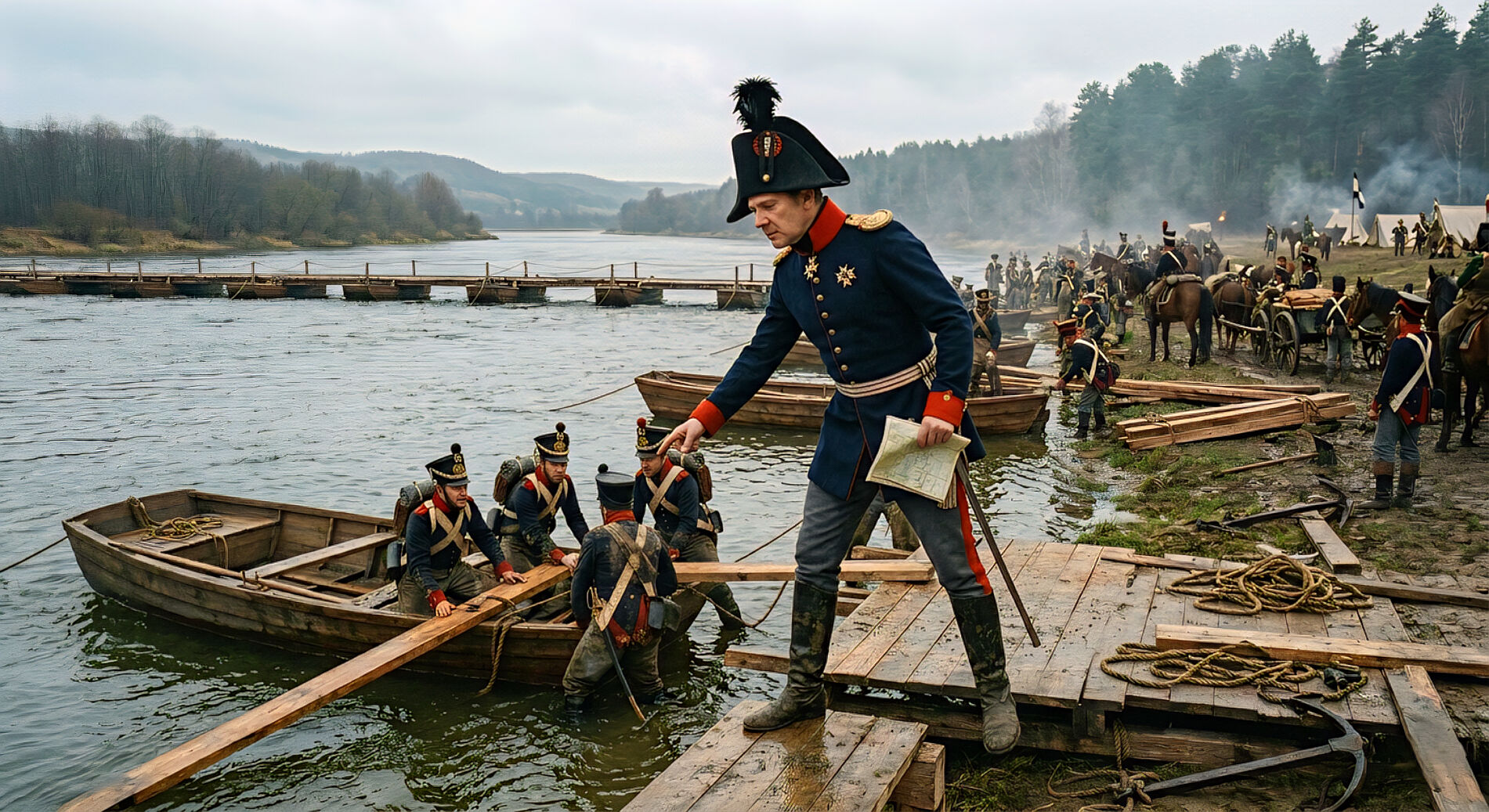
They say the soul carries scars, but I think it also carries blueprints. In my current life, I am an American citizen of Spanish Basque descent, living a quiet life defined by modern comforts. Yet, for as long as I can remember, my dreams have been filled with the scent of sawdust, black powder, and wet earth. I have always known that before I was who I am today, I was someone else: a man who wore the blue coat of a Prussian Officer, carrying the blood of French Basque royalty, caught in the grand, violent machinery of the Napoleonic Wars.
My journey to the Prussian Engineering Corps was born of fire. My family belonged to the old French aristocracy, rooted in the rugged Basque Pyrenees. When the French Revolution erupted, the world we knew was devoured by the guillotine. We fled, stripped of our titles but not our honor. As a young expatriate with a natural gift for mathematics and structural design, I found a cold but welcoming refuge in the Kingdom of Prussia. They cared little for my French accent; they needed my mind. I was commissioned as a military architect, tasked with reshaping the very earth to ensure the survival and victory of the Prussian Army.
An engineer’s duty in those days was vast, exhausting, and utterly vital. My life was a constant oscillation between the quiet precision of drafting tables and the chaotic terror of the front lines.
The Architecture of War
To many, a military architect sits safely behind the lines. In reality, my boots were always covered in mud. My duties spanned the entire spectrum of combat logistics and strategy:
Reconnaissance & River Crossings: I frequently rode alongside light cavalry—hussars and jaded scouts—galloping ahead of the main army to find a way across swollen, treacherous rivers. Once a location was scouted, my men and I would work through the night to construct vital pontoon bridges, allowing thousands of infantrymen and heavy artillery to breach the opposite banks before the enemy even knew we were there.
Terrain Navigation: I mapped and discovered hidden pathways through dense forests and difficult mountain passes, turning impassable terrain into a tactical advantage.
Fortifications: I breathed life into stone and earth. I reinforced crumbling strongholds, constructed new redoubts from scratch, and expanded existing fortresses to withstand the devastating impact of French cannon fire.
Deception & Logistics: Warfare is a game of smoke and mirrors. I often designed diversionary constructions—false camps and mock fortifications—to feed the French army misleading intelligence. When we weren’t deceiving the enemy, we were carving out new, strategic roads to ensure our supply lines remained intact.
A Meeting of Minds: Carl von Clausewitz
It was during the chaotic buildup to the campaigns of 1812 and 1813 that I crossed paths with a man whose name would echo through history: Carl von Clausewitz. At the time, he was a brilliant, intensely focused staff officer, deeply frustrated by Prussia’s forced alignment with Napoleon.
I remember a bitter, rainy night in a drafty tavern near the Russian border, huddled over a map with Clausewitz. I was sketching the blueprints for a series of hasty earthworks meant to delay a French vanguard. He watched my charcoal move across the parchment, his eyes sharp and analytical.
“You build well, Lieutenant,” Clausewitz remarked, his voice quiet but commanding. “But remember, a fortification is not merely a wall of stone; it is an instrument to dictate the enemy’s center of gravity. Force them to turn where they do not wish to look.”
We argued late into the night. I viewed the battlefield through the lens of geometry, angles of deflection, and structural integrity. Clausewitz viewed it as a living, breathing monster driven by human psychology and the unpredictable “friction” of war.
A year later, during the War of Liberation, that mutual respect saved my life. I had been sent with a small detachment of cavalry to scout a crossing along the Elbe River. We were ambushed by French Chasseurs and forced to retreat into a dense thicket. Just as we were about to be overrun, a Prussian column arrived, smashing into the French flank. Riding near the front was Clausewitz.
After the skirmish, as I stood catching my breath beside the half-finished pontoon we had desperately tried to secure, Clausewitz rode up to me, a rare, grim smile on his face.
“It seems, my Basque friend, that the friction of war almost claimed your geometry today,” he said, offering me a flask of schnapps. “Let us get your bridges built. The army needs to march.”
Echoes in the Blood
I died in that life, though the exact details are lost to the fog of my memories—perhaps a stray musket ball during a siege, or the slow fade of camp fever. But the soul does not forget
Today, when I look at the rolling hills of the American landscape, or when I trace my ancestry back to the Basque country that spans the border of France and Spain, I feel the pull of that past life. I look at modern bridges and feel an innate understanding of their stress points. I look at a map and instinctively look for the high ground and the hidden defiles. I was an exile, a Frenchman fighting for Prussia, an architect of war. And somewhere deep inside me, the drafts are still drawn, and the bridges are still being built.
The burning monk of Vietnam

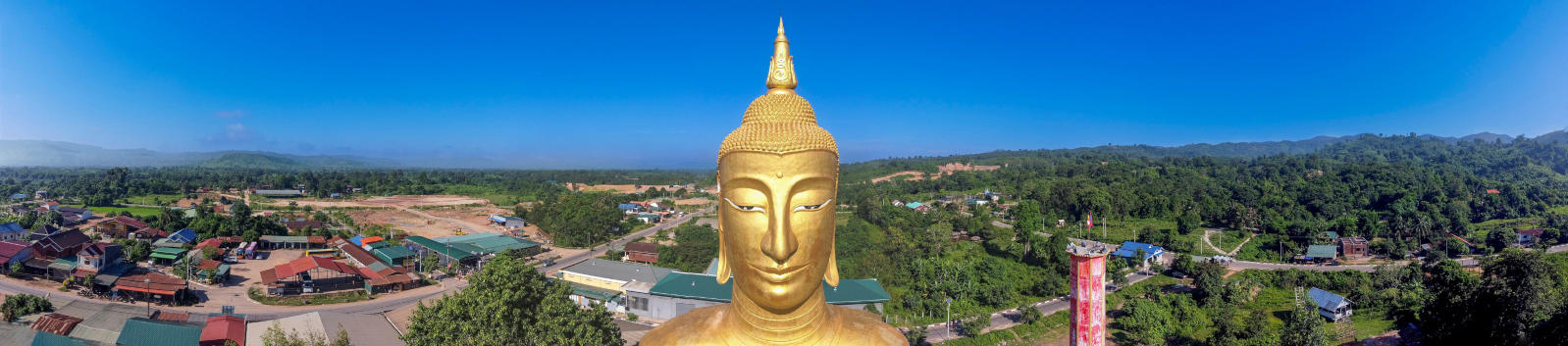
I am looking at a drone photograph I took recently at the border between Laos and Vietnam, in a place called Dansavan. Captured from above, the great Buddha statue sits in the profound posture of a Dharma-teaching Buddha. Looking closely at the image, I feel a strange, haunting pull. The statue captures something miraculous: the Buddha is actively teaching the Dharma while he is in deep meditation, communicating his wisdom directly from a state of Nirvana—the highest level of existence—right here on Earth. For most, this is a beautiful piece of religious art. But for me, it is a literal, historical record. I know it is real because, in a past life I am only now beginning to fully piece together, I saw a man prove it to the world.
In early 1963, I arrived in South Vietnam as a Civil Engineer with the US Army Corps of Engineers. My mission was entirely structural: I was there to build. Leading crews made up of American GIs, South Vietnamese soldiers, and local civilian contractors, we worked tirelessly against the terrain. We paved supply roads through dense jungle, shaped earthwork fortifications around remote outposts, dug irrigation systems, and laid down aqueducts to move water. We engineered bridges over muddy rivers and carved out tactical airports and heliports from the raw earth.
While my hands were busy with blueprints, my eyes were taking in a brutal reality. In the rural provinces where we built our projects, the poverty was staggering. The local population lived in widespread, systemic misery. It didn’t take long to realize why so many of the rural peasants favored communism over the capitalism we were trying to market to them. When you have absolutely nothing, a system that promises to distribute resources evenly sounds like survival; capitalism just looked like a luxury for the elites in Saigon.
Then came June 11, 1963.
Word spread rapidly across the country about what had happened at a busy, central intersection in Saigon. An elderly Buddhist monk named Thich Quang Duc had stepped out of a vehicle, walked calmly to the center of the asphalt, sat down in the lotus position, and began to meditate. Another monk poured gasoline completely over him.
The monk was protesting the severe religious persecution of the Buddhist majority by South Vietnam’s pro-Western, US-backed government, which was aggressively trying to suppress local traditions. It was a desperate act to wake the world up to the destruction of their identity.
What transpired next defied human biology. Thich Quang Duc struck a match and set himself on fire.
EDS NOTE: GRAPHIC CONTENT – Thich Quang Duc, a Buddhist monk, burns himself to death on a Saigon street June 11, 1963 to protest alleged persecution of Buddhists by the South Vietnamese government. (AP Photo/Malcolm Browne), best photo of the year Pulitzer Prize.
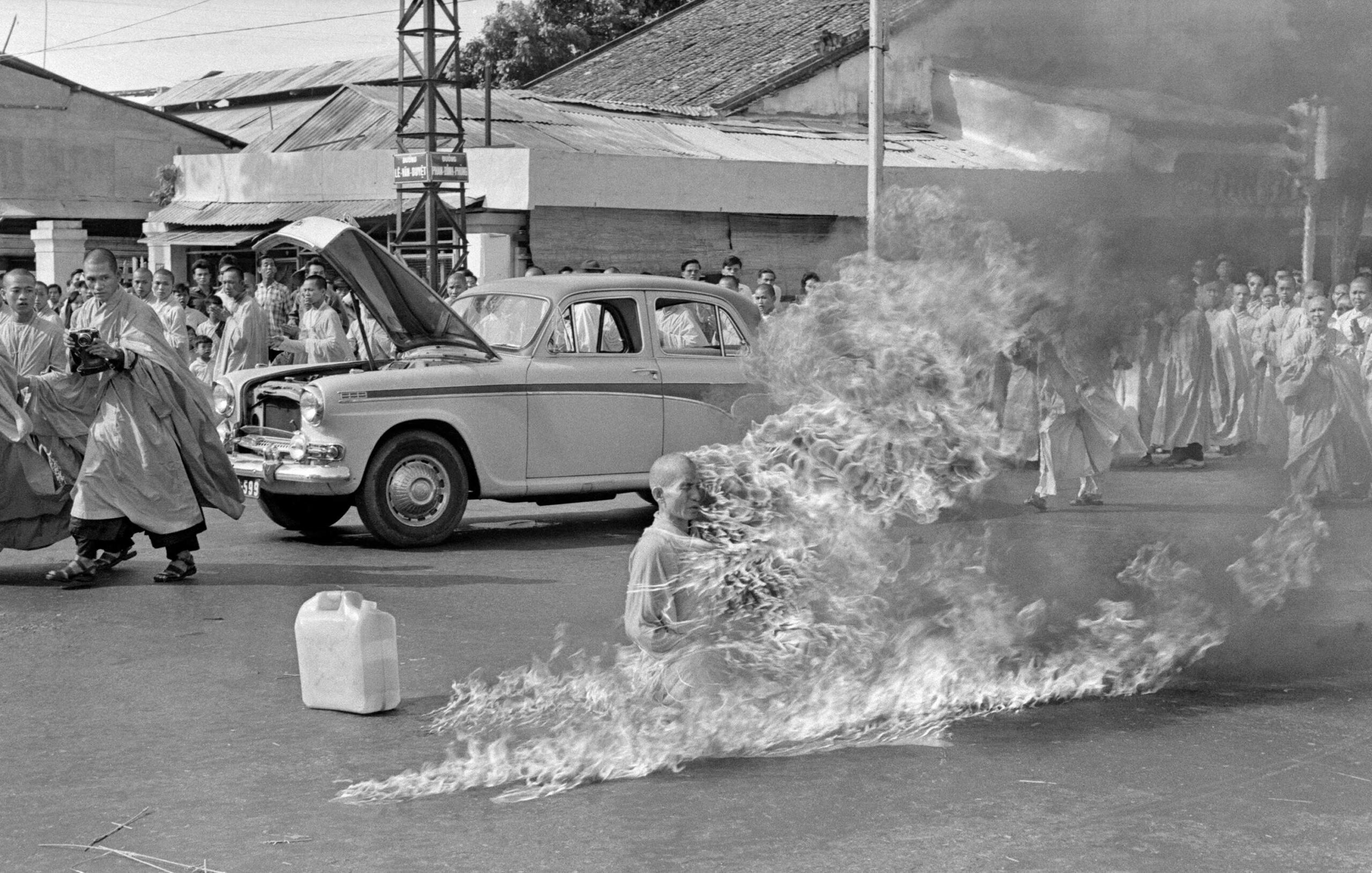
As the flames roared, consuming his flesh, he did not scream. He did not distort his face. He didn’t move a single muscle. He remained perfectly upright, frozen in absolute tranquility. It was evident from the witness accounts that he had achieved the state of an Arhat—someone who has fully realized Nirvana. Through decades of rigorous training, his mind was so deeply anchored in meditation that it had entirely disconnected from his nervous system. There was an absolute absence of suffering. He didn’t have to realize he was dead after the fact; he was already in Nirvana when he died. With his immolation, he proved that Buddhism meant business—that the pose of the Dharma-teaching Buddha in deep meditation is something real, and it is really happening.
When I finally saw the stark, horrifying black-and-white photograph captured by Pulitzer Prize winner Malcolm Browne, something snapped inside me.
Looking at that image, the official narrative we were being fed collapsed. This wasn’t a war about communism versus capitalism. It was a war about colonization. First the French, and now the United States, were foreign cultures invading a land to impose our own systems and values over a local population that just wanted their sovereignty. We were simply the latest empire trying to master a people who would rather burn alive in silent defiance than submit to foreign control.
I couldn’t keep it to myself. I began openly expressing my thoughts to my peers and superiors, questioning our presence in Vietnam and calling it what it was: a colonial occupation disguised as a rescue mission.
In the military, during a hot war, dissent is dangerous. They didn’t court-martial me. Instead, one dark night in our compound, a fragmentation grenade was slipped under the tarp of my quarters.
The blast killed me instantly, ending my life as an engineer in 1970. But code, concrete, and flesh fade away—while the truth of what that monk proved at the Saigon crossroads remains burned into my soul across lifetimes.